
THE LIME KILN
La Carcàra dë zië Torë
Lime kilnS
A tower of dry-laid stone, fire, and the skill of those who knew how to tame it: the story of a family and of how lime was made.
The family history
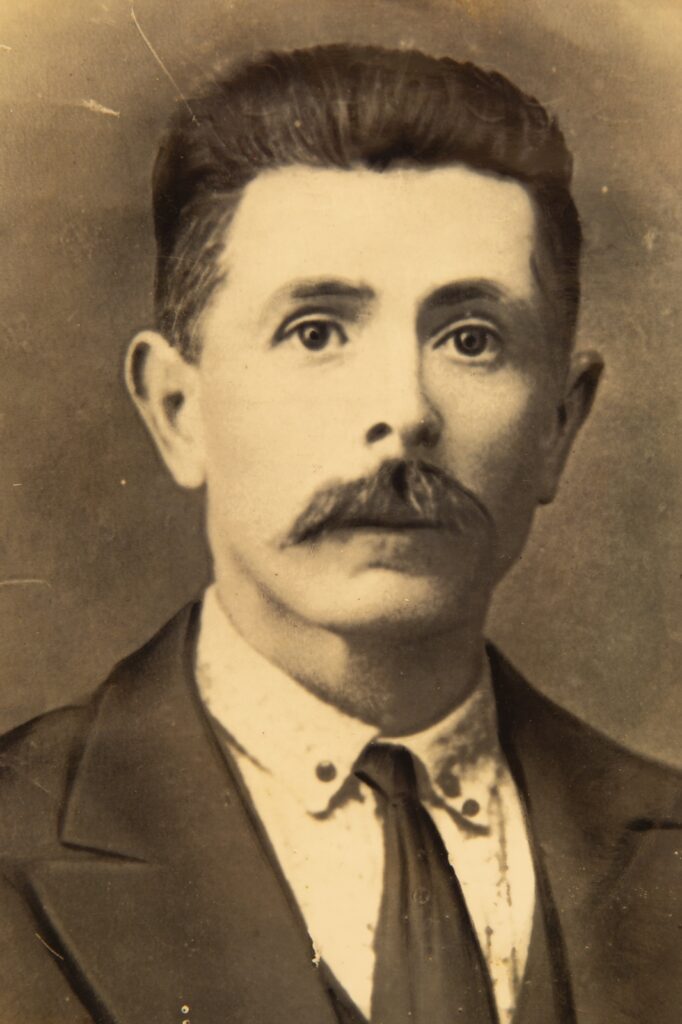
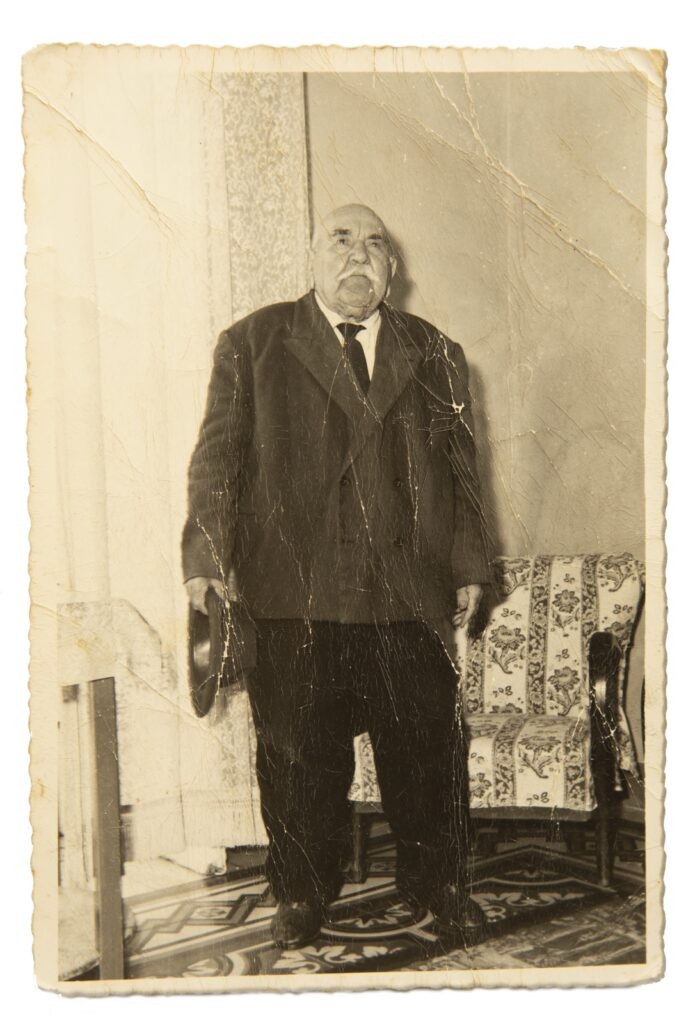
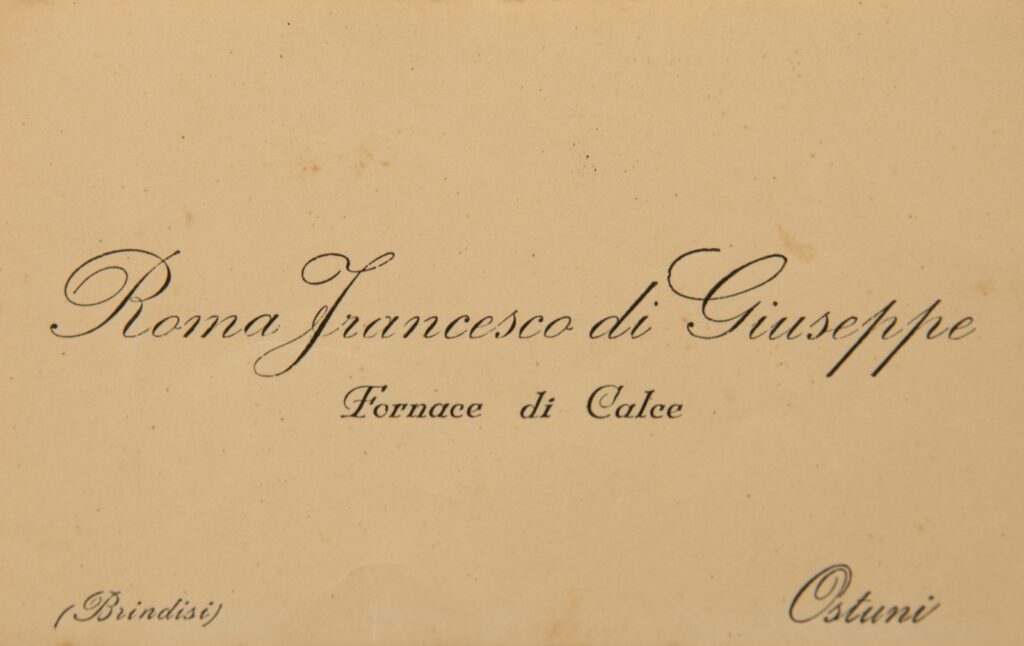
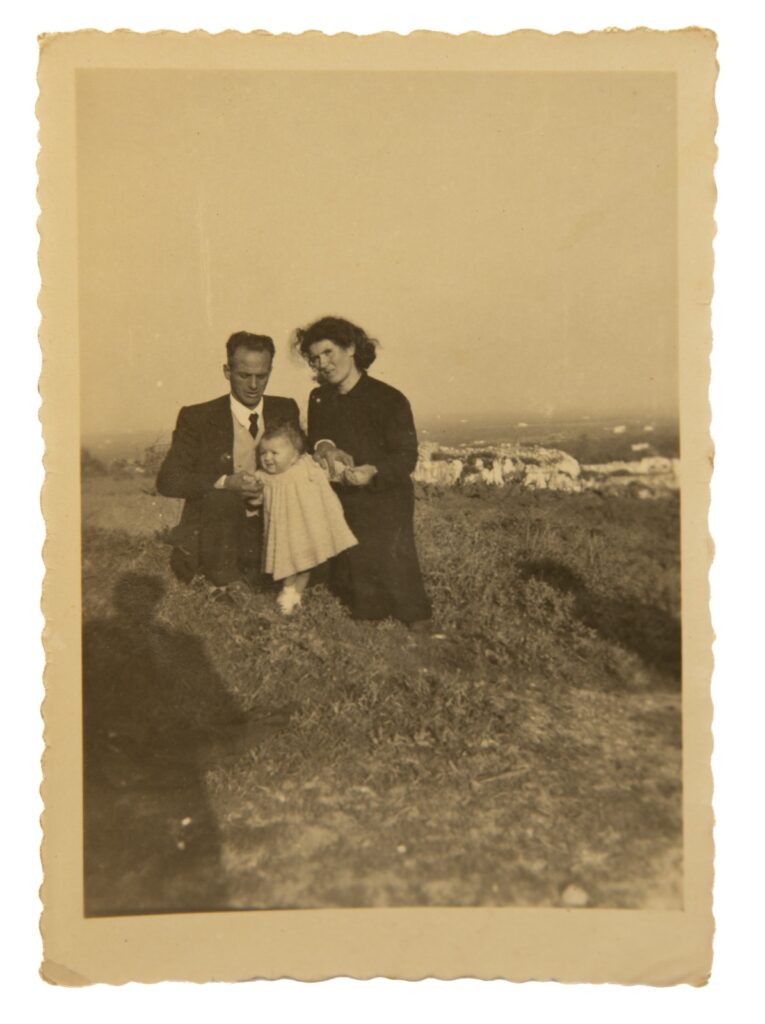
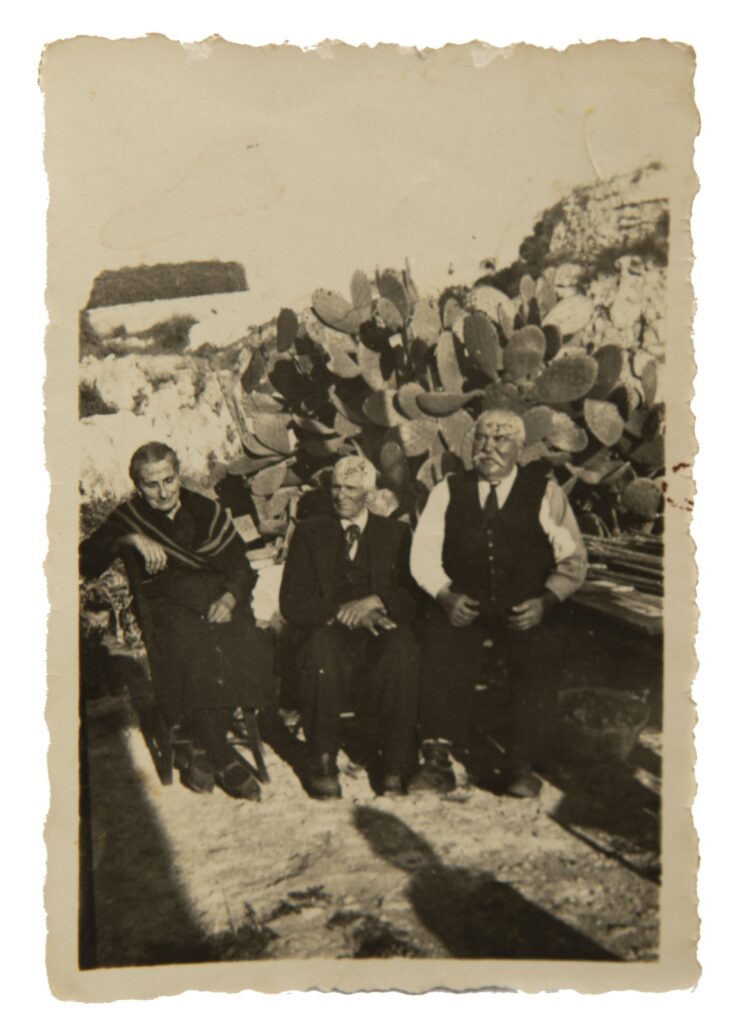
The history of the “Carcàra dë zië Torë” is intertwined with that of the Rodio family. It all began with Giuseppina Roma, mother of the current owner, Pietro Rodio: her father, Francesco Roma, was a “carcarùlu” – the owner of other limestone quarries in the area – who died of pneumonia as a result of his work. Giuseppina, who was left fatherless along with her three sisters, was entrusted to her paternal aunt, Meluccia, who was married without children to “zië Torë” – whose real name was Salvatore Marseglia – from whom she later received this limestone quarry as a gift. The project to restore the ‘carcàra’ stems from a desire to recount and pass on the dedication of those who, like grandfather Francesco or uncle Salvatore, contributed through their hard work to shaping, year after year, layer of lime after layer of lime, Ostuni’s image as the ‘White City’ par excellence – a whiteness born precisely in places like this, the lime kilns, where stone was transformed into lime.
Lo zië Torë
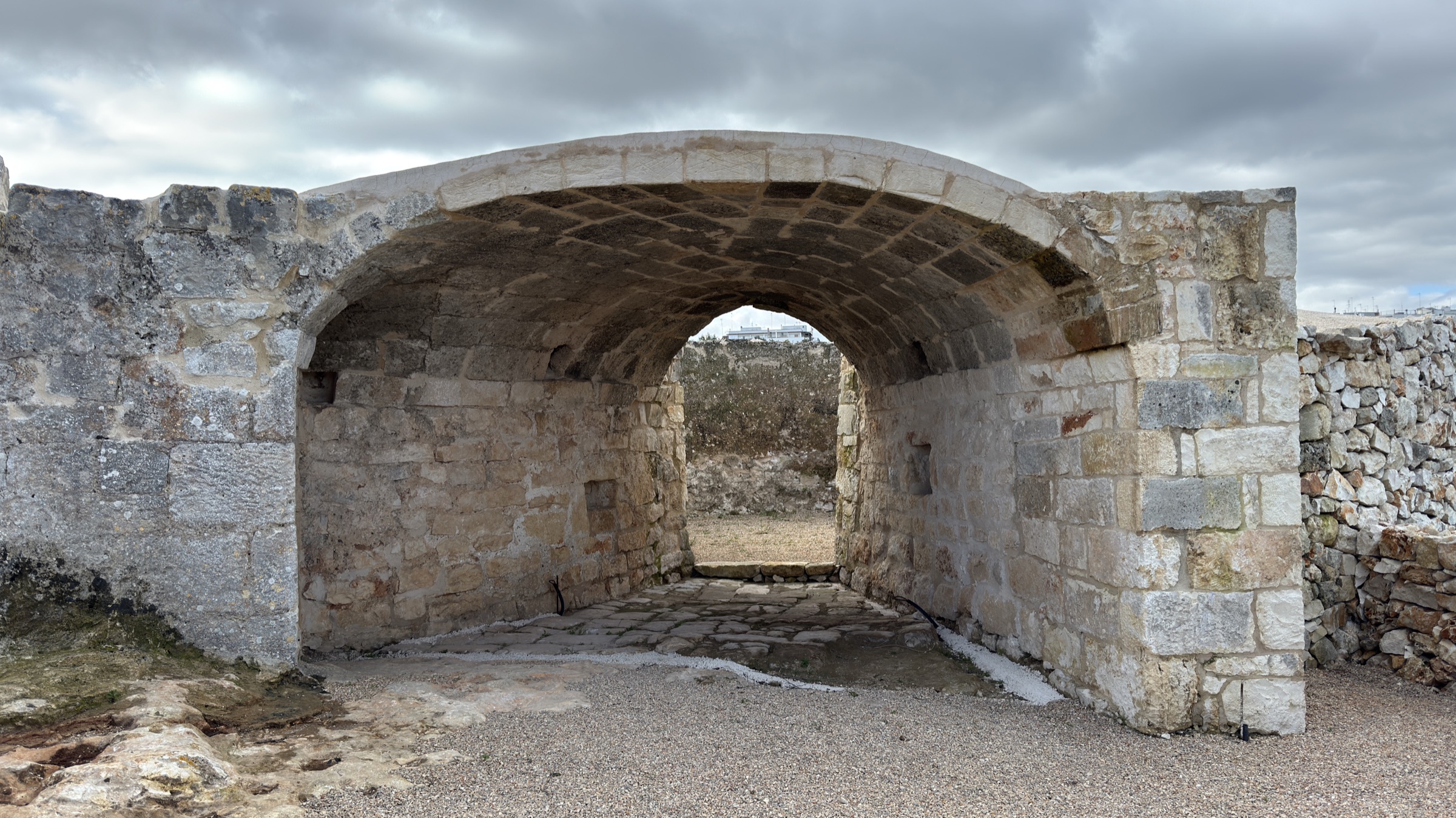
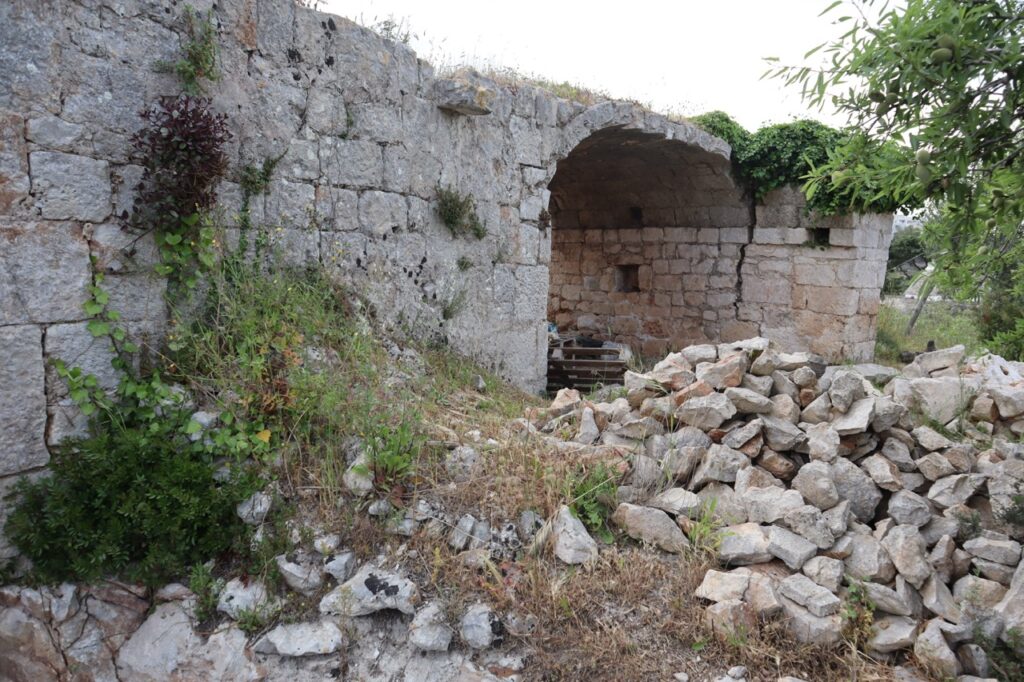
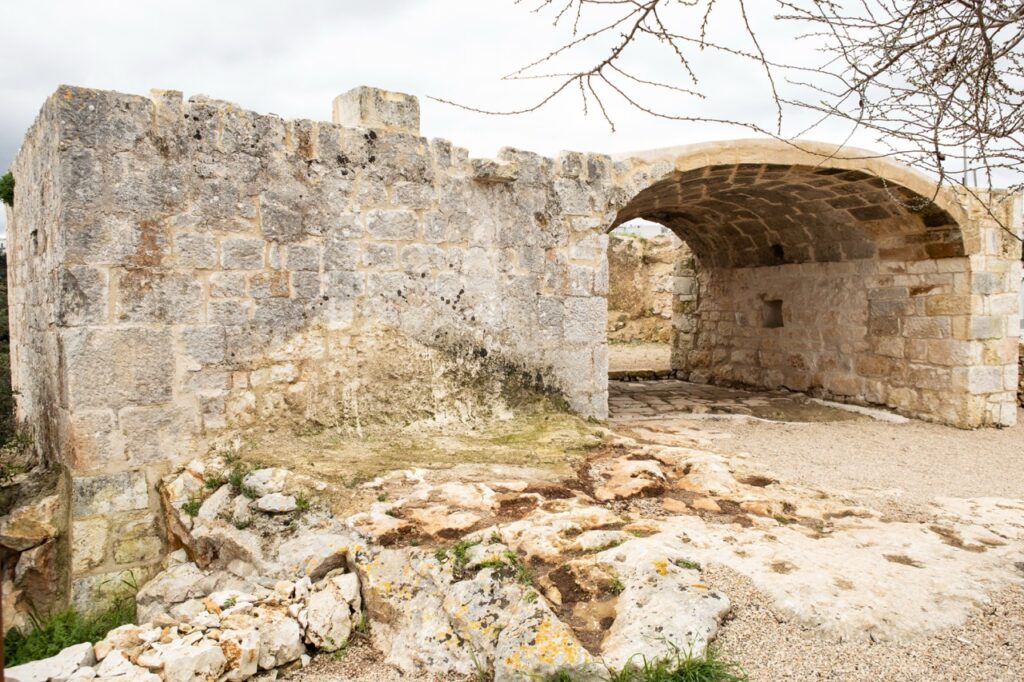
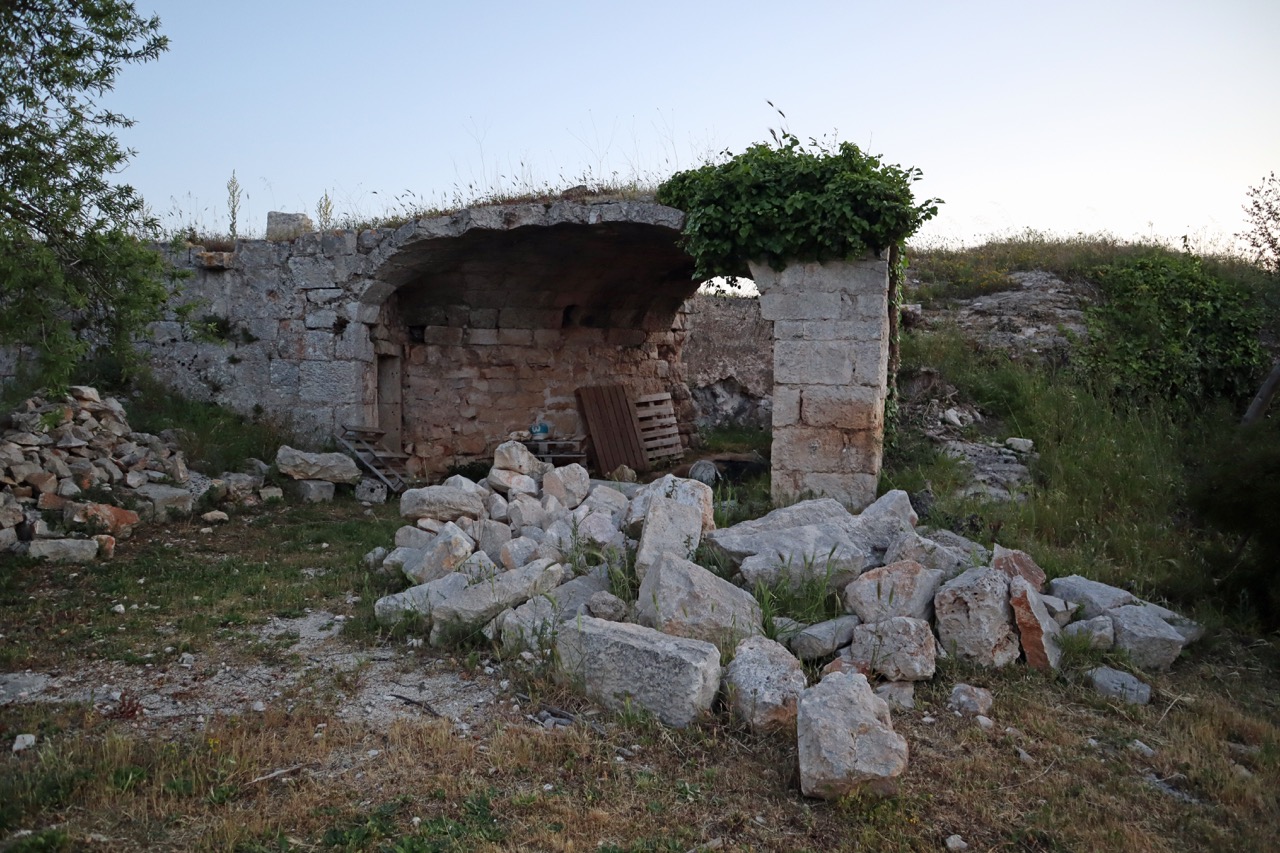
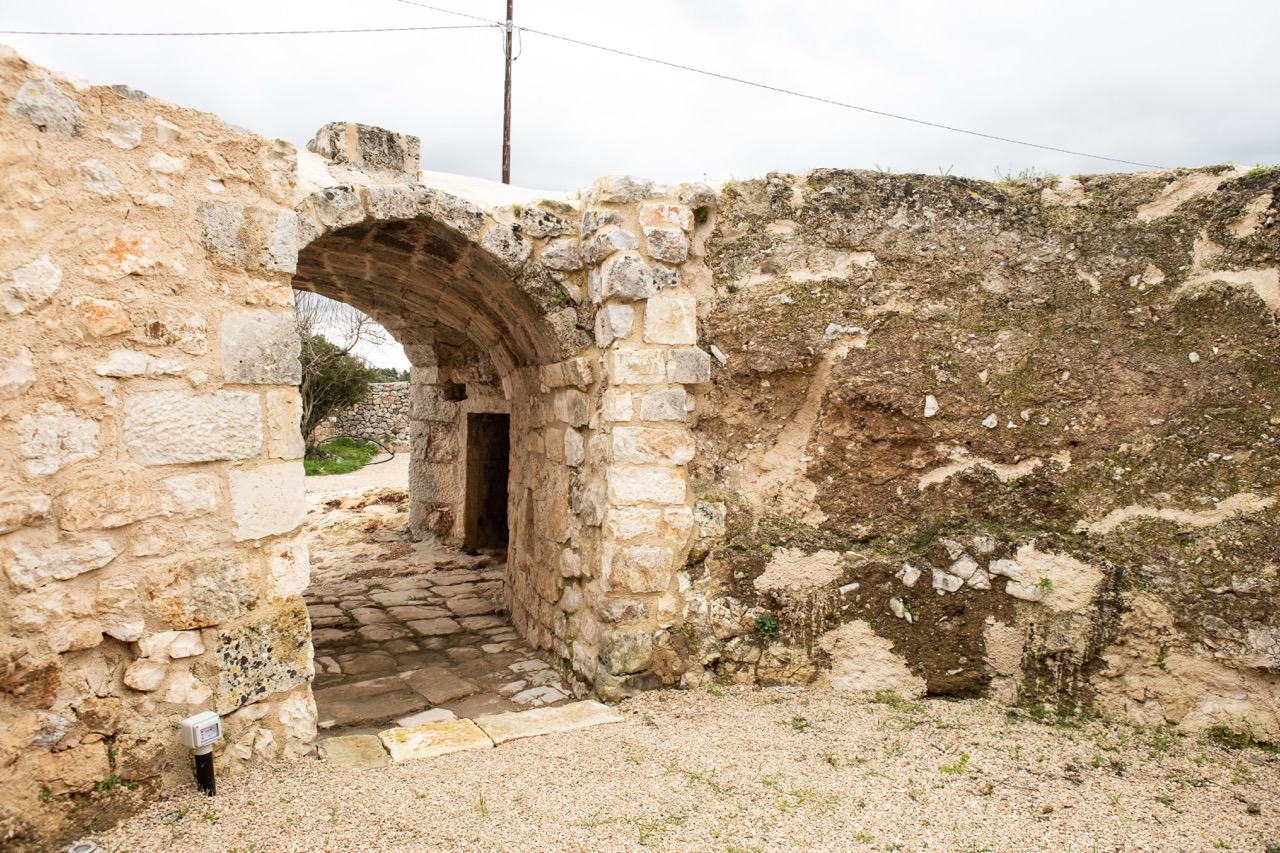
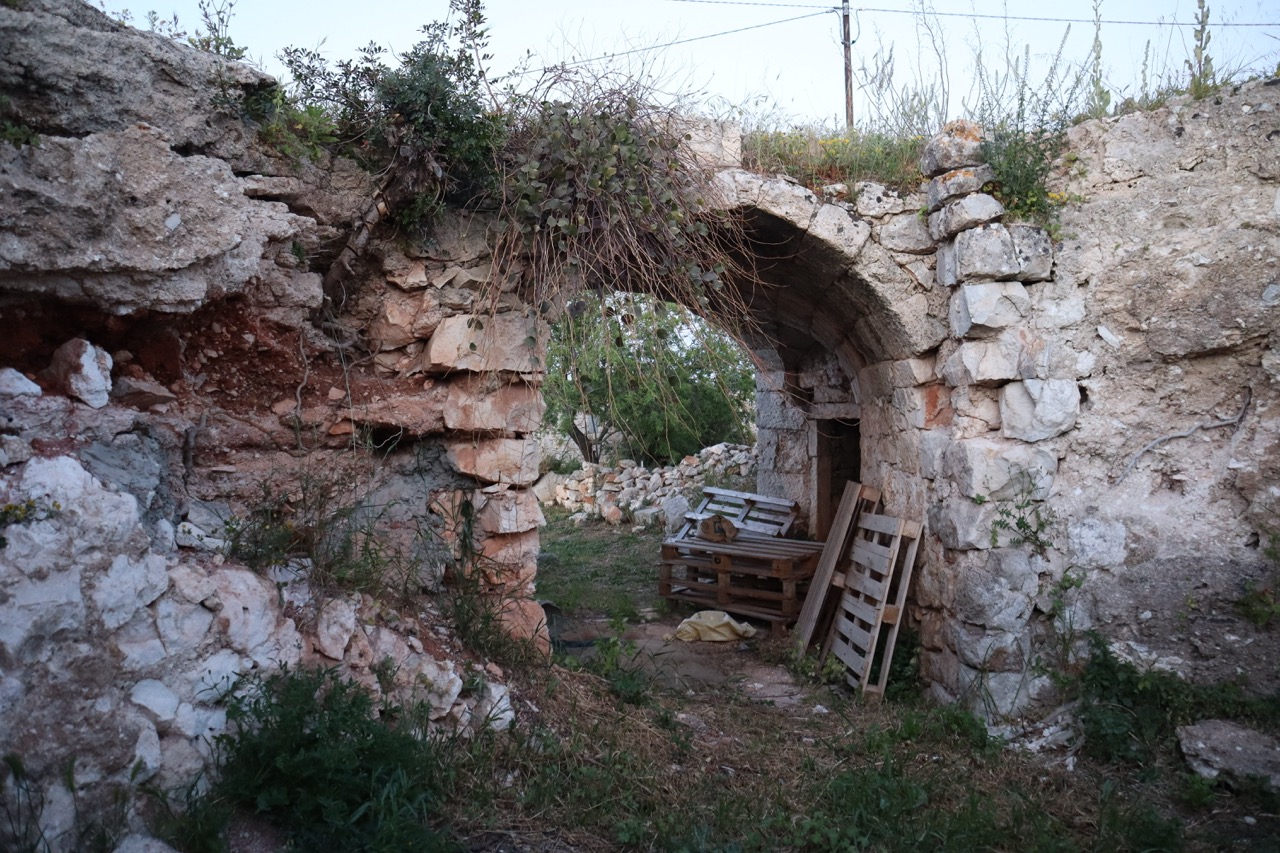
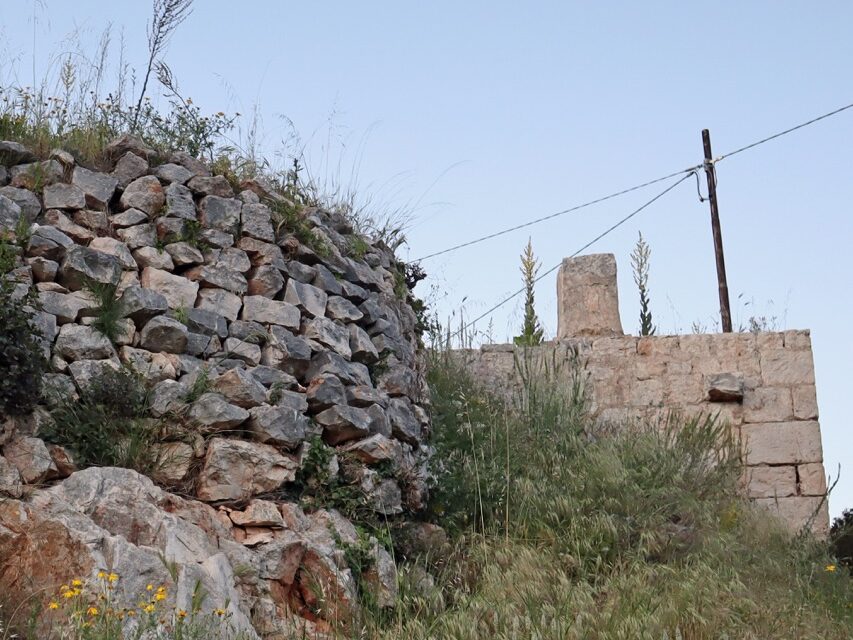
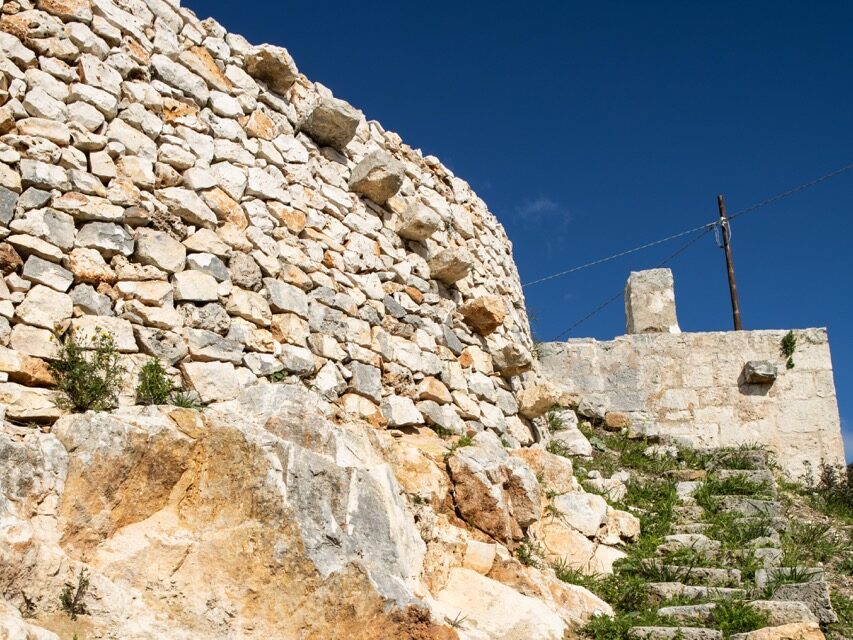
The ‘carcàra’ before restoration
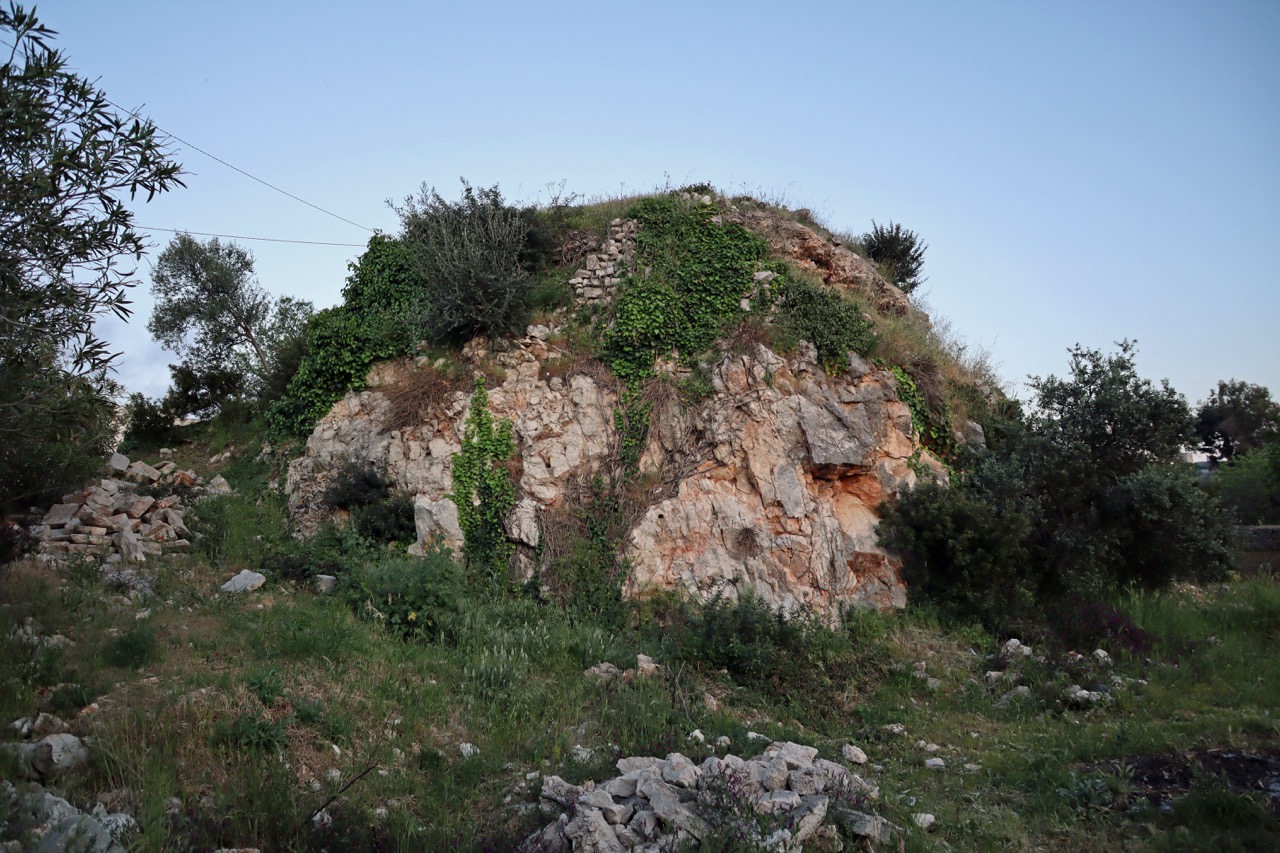
The “Carcàra dë zië Torë” ceased production in the 1970s. Since then,
the structure has suffered progressive deterioration due to neglect:
water seepage triggered the initial signs of instability, which were subsequently exacerbated by vegetation that had taken over the entire structure. Quarrying activity around the lime kiln had already eroded and cracked the bedrock beneath it, and subsequent structural failures had caused widespread collapses in the external dry-stone retaining wall, resulting in the erosion of the
most unstable parts of the backfill behind the kiln. At the entrance archway to the kiln, the growth of vegetation within
a crack had caused the end section of the load-bearing wall to detach, leading to the collapse of a portion of the archway’s vault.
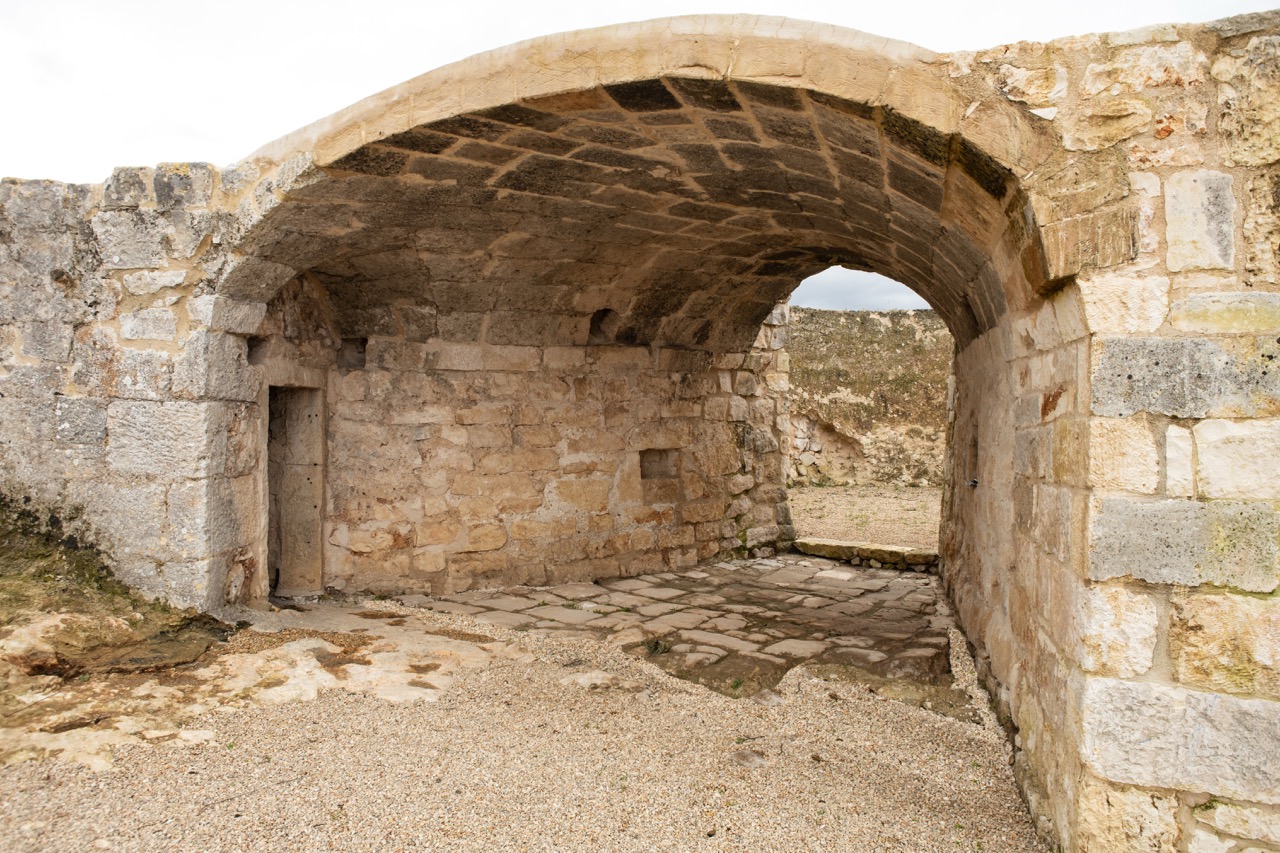
The ‘lamiodda’ presented not only obvious problems related to the presence of damp, but also significant structural instability caused by the undercutting of the base of the north-east corner of the building by rainwater, resulting in the flaking of the foundation rock and the opening of a crack in the load-bearing masonry.
Finally, the dry-stone terraces along the slope had largely collapsed, as had the ring wall surrounding the base of the cliff, which had been shaped by quarrying activity.
How the kiln worked
Limestone quarrying
The mastri carcaruli were also “cavamonti”, that is, stonecutters, as they had to obtain the raw material essential for the production of quicklime: limestone. To do so, they also employed mining techniques: they prepared and detonated charges in the quarries, using a range of specialised tools. These included: ‘la màzza’ (a heavy iron sledgehammer), ‘lu zëcchèttë’ (the pickaxe), ‘lu martièddë’ (the hammer), ‘lu štambë’ (the post onto which the sledgehammer was brought down to create the chamber for the charge), ‘la mazzóla’ (a smaller iron sledgehammer, also used on the stake) and ‘la spassètta’, which was used to clear the hole into which water was also poured to help dislodge the rock fragments.
Once the charge of black powder had been prepared and the hole into which the fuse had been placed had been sealed tightly, bundles of twigs were arranged around it to contain the scattering of stones caused by the explosion. The quarried stones were then carried on the shoulders to the lime kiln. For this reason, most permanent lime kilns were situated within or in the immediate vicinity of the quarries, so as to minimise the transportation distance.
The construction of the calcara
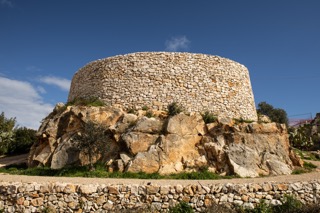
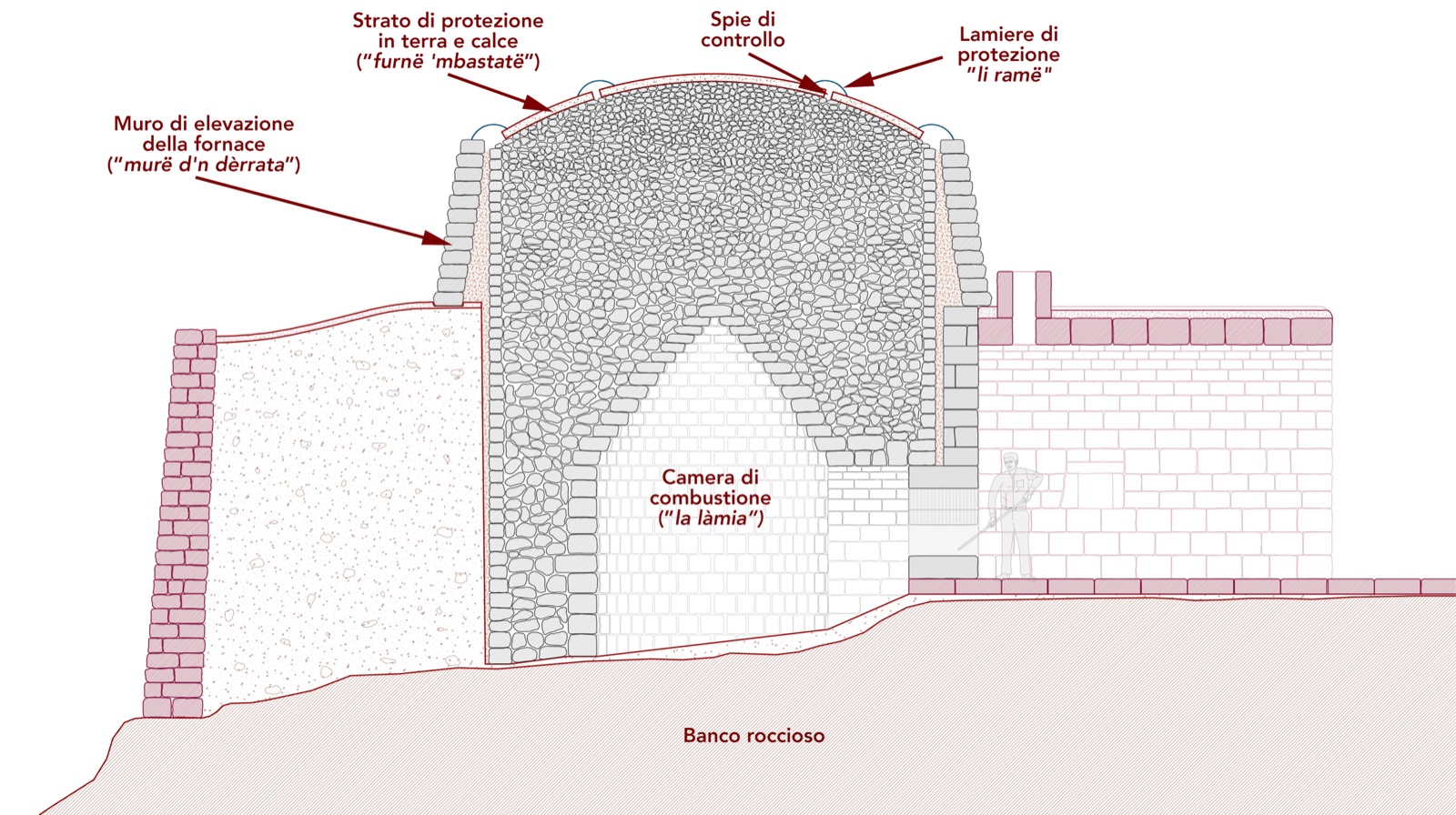
What can be seen of the carcàra today is in fact the permanent structure on which, cycle after cycle, the dry-stone construction used for firing was raised. It is made up of two essential elements: the “lamiòdda”, the small room where the carcarùli found rest and refreshment, and “lu furne”, the furnace, dug partly into the ground of a small rise. The two are connected by “l’arcone”, the covered space that made it possible to work sheltered from the weather. Around the carcàra an imposing retaining wall had also been raised, in all likelihood built to prevent the collapse of the embankment of “lu furne” — a risk created by the intense quarrying of stone in the surrounding area.
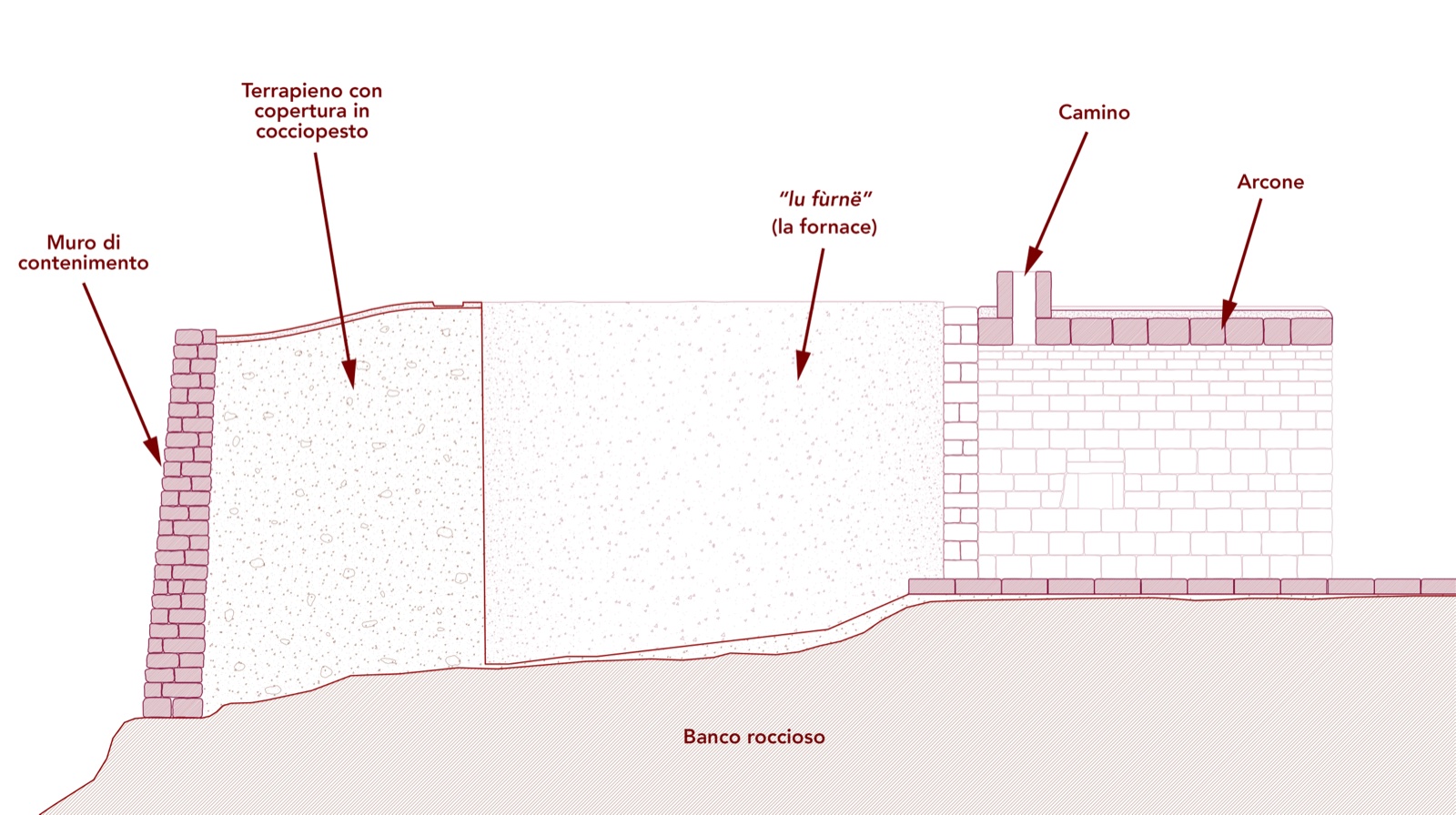
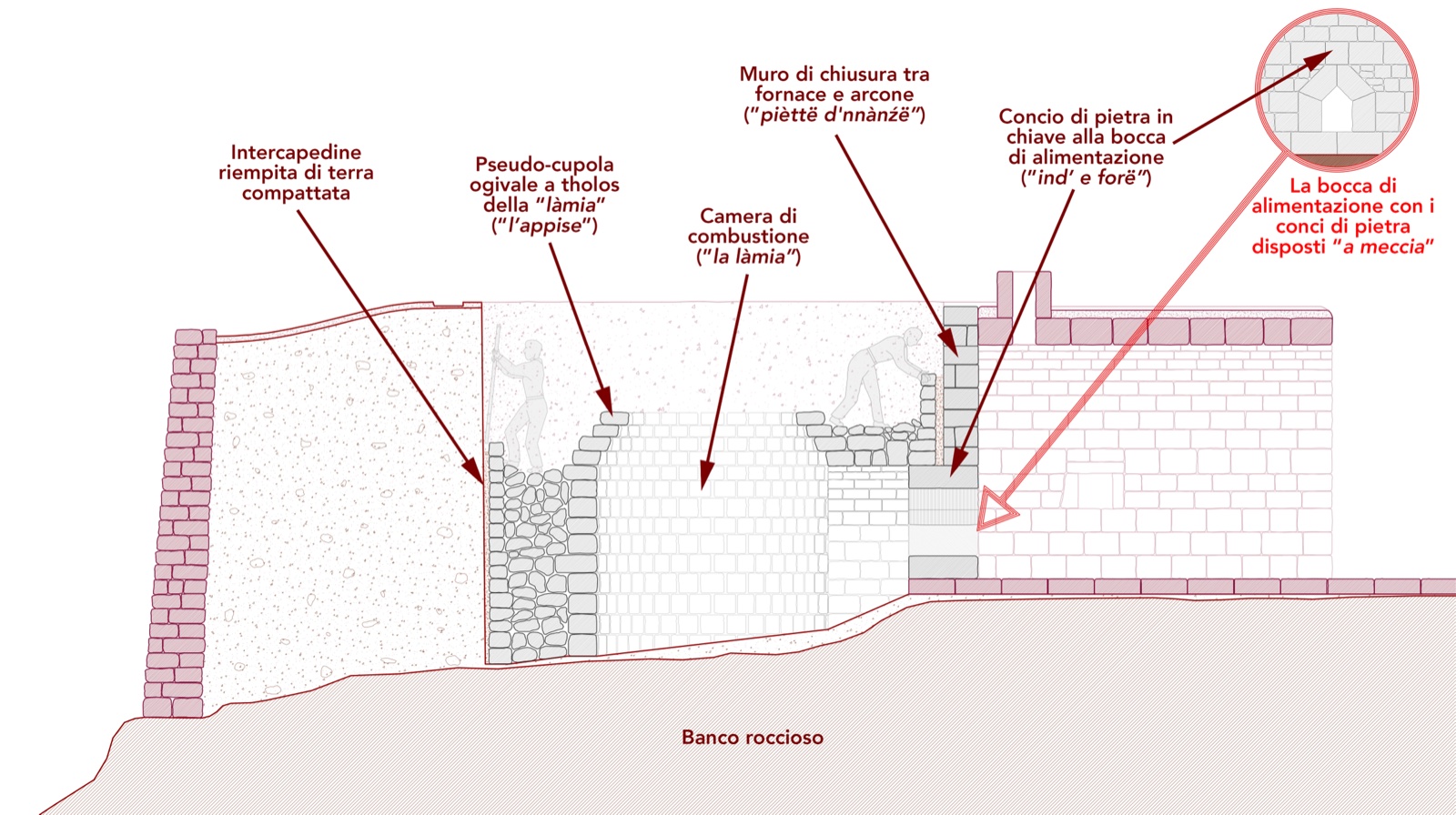
Raising and loading the calcara were complex operations that required around ten workers and could last as long as two weeks. The heart of the construction was the combustion chamber, called “la làmia”: it was here that the true art of the master lime-burner (mastro carcarulo) was revealed. The “làmia” was built entirely in dry stone, with limestone blocks that were themselves destined to turn into quicklime during firing. It was raised at the centre of the furnace using the “tholos” technique — the same as the false dome of the trulli — by stacking concentric rings of stone that gradually narrowed towards the top, and setting the blocks a few centimetres apart to let the heat pass through more easily. It was the most delicate and complex part of the entire calcara, since it had to bear a weight of several hundred quintals.
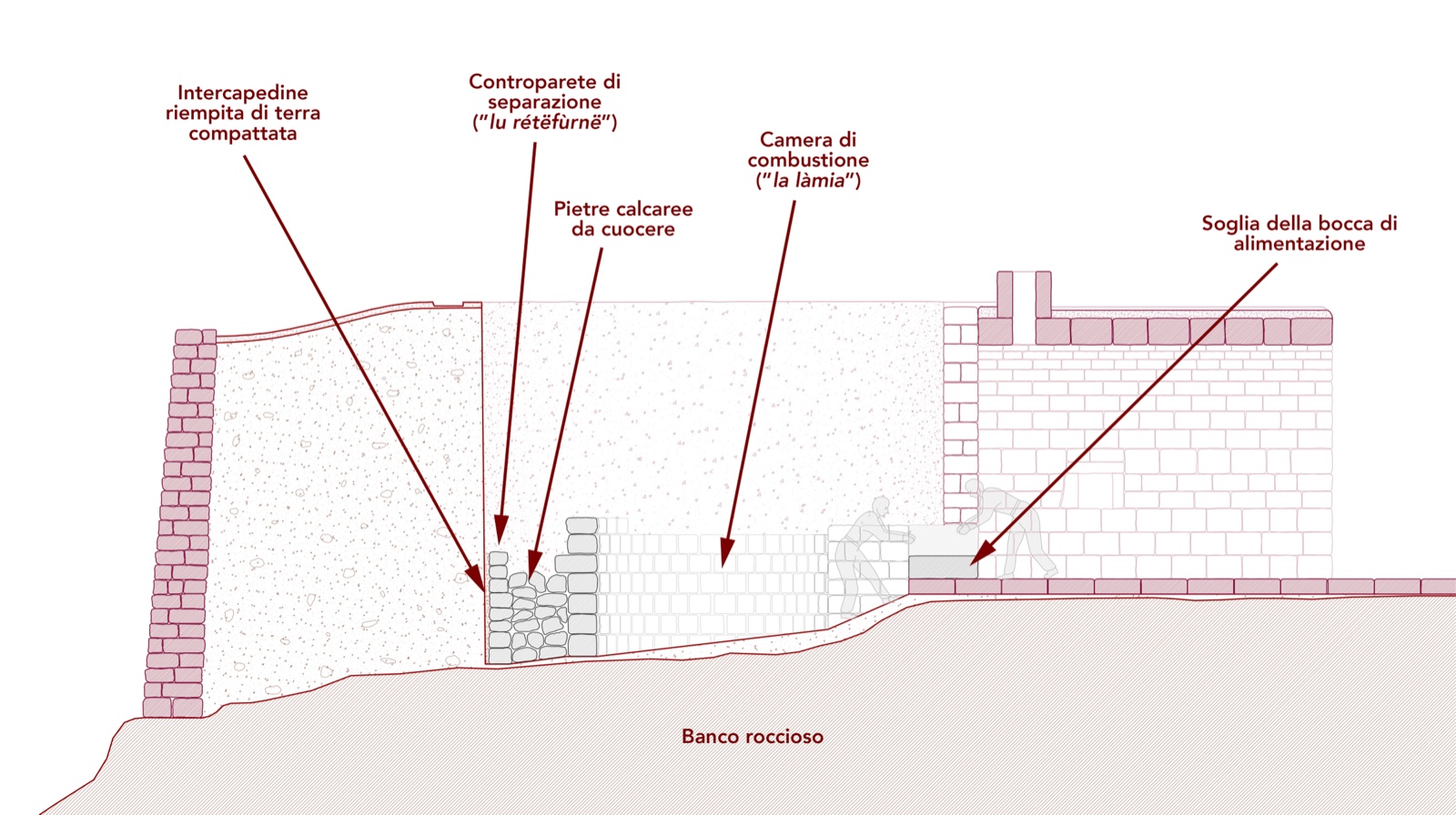
Along the cylinder of the furnace’s permanent structure, “lu fùrnë”, about five centimetres from the inner wall, “lu rétëfùrnë” was built: a dry-stone limestone counter-wall that created a cavity, later filled with compacted red earth. This layer thermally insulated the stone to be fired from the rest of the structure. The gap between the arcone and the furnace was closed off by a wall known as “pièttë d’nnànźë”, in which the feeding mouth was set. On a threshold about thirty centimetres high, two vertical stone slabs were placed, forming an opening of roughly 40×40 centimetres. Instead of a single lintel — which would have risked snapping under the weight — two slabs were used, arranged “a mèccia”, that is, interlocked in an inverted “V”. Above the feeding mouth, perpendicular to the closing wall, lay a long stone block called “ind’ e forë”, the connecting element between the outer wall and the combustion chamber.
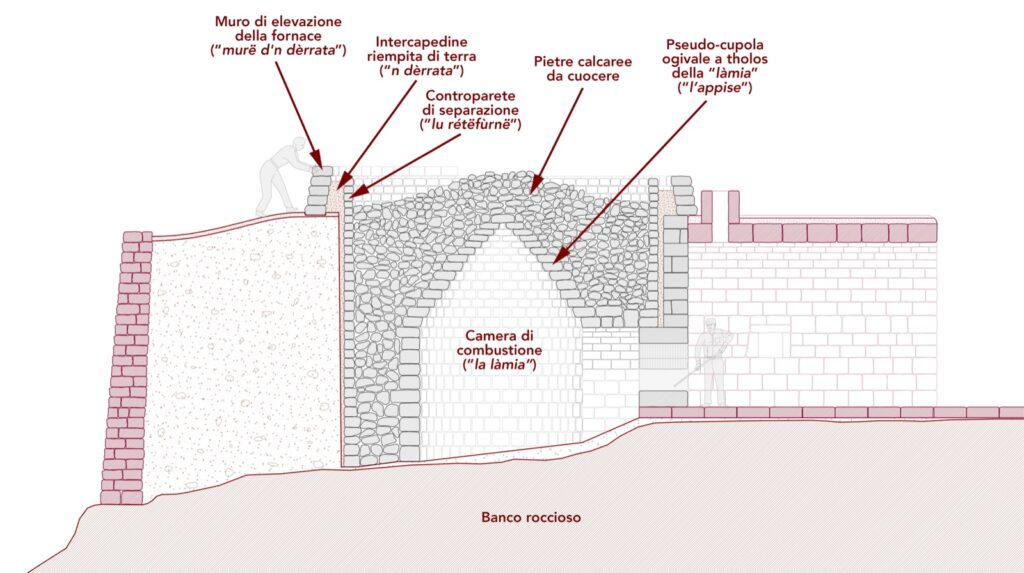
The stones to be fired were carefully arranged in the space between the counter-wall of “lu rétëfùrnë” and the structure of the “làmia”, and were then layered above it as well. When the height of the arcone was reached, an additional wall called “lu murë d’n dèrrata” was built all around the outer perimeter of the furnace to increase the quantity of stone that could be fired: this raised the carcàra by a further 2–3 metres and made it possible to extend the cylinder of “lu rétëfùrnë” upwards, which was then filled with limestone until it formed a dome.
The dome of stones was finally coated with “lu furnë ‘mbastatë”: a layer of lime mixed with earth — “lu uélë” — which served the twofold purpose of retaining heat and protecting the stones from the weather. This layer covered the entire dome, though it left an outer ring of about thirty centimetres uncovered along the perimeter. About ten holes, each 35–40 centimetres in diameter, were made in the covering layer, through which the carcarùli monitored the progress of the firing. Both the uncovered outer ring and the inspection holes were shielded from the wind by curved metal sheets, called “li ramë” — generally made from salvaged old drums — whose position had to be adjusted each time according to the direction of the wind.
Firing the stone
Once the structure was complete, the firing of the limestone began, a process that could last up to a month. Throughout this period, the kiln had to be fed continuously, day and night, with constant monitoring of the process.
The work was organised into shifts of around five hours each, with four workers taking turns in pairs: from 1.00 pm to 6.00 pm, from 6.00 pm to 10.00 pm, from 10.00 pm to 3.00 am, from 3.00 am to 8.00 am and from 8.00 am to 1.00 pm. The hardest shifts were, of course, the night ones. This rota was known as ‘la vècëta’. To rest, the workers had a small room adjacent to the arched chamber, ‘la lamiòdda’, which also served as a changing room.
The fuel consisted of bundles of twigs, generally made up of leafy branches from pruning olive trees or from forest clearing.
For a lime kiln producing a thousand quintals, around three thousand bundles were required. These were stacked near the kiln in characteristic conical piles called “mete”, then untied with a blow from an axe and divided into small heaps – “li muèrsë” (the bites) – ready to be placed in the fire. The quantity placed in front of the furnace at any one time, beneath the arch, was known as the ‘chjéna’ (the full load), consisting of around eighty bundles of brushwood.
The temperature had to be kept constantly above 850– 900 degrees Celsius. The carcarùlo monitored the progress of the firing through the viewing holes cut into the roof: after a day, the inside of the holes took on a vermilion-red colour and, as the days went by, the colour grew progressively lighter until it turned a beautiful golden hue. At that point, the holes had fulfilled
their purpose and were therefore sealed with a layer of earth to retain the heat inside.
When the smoke, which was initially black, gradually turned a coffee-like colour and then turned white, and above all when the domed mound of the kiln had subsided by about half a metre, the firing was considered complete. However, dismantling the structure could only take place once the kiln had cooled completely, a process which took on average a further week.
Dismantling
Dismantling the lime kiln was the hardest part of the process, the one that required the most effort and sweat. Once ‘la ndèrrata’ had been removed, the still-scorching lime had to be extracted with great care: it was not uncommon for workers to suffer burns or bruises from falling hot stones. Just as construction had taken place from the bottom up, dismantling proceeded in the opposite direction, from the top down.
The carcarùli, depending on the quantities demanded by the market, would remove part of the earth and lime lining covering the kiln’s dome and, with the aid of ‘lu zappónë’ (the pickaxe), extract only the quantity of quicklime stones intended for immediate sale, with the remaining section then being covered over.
This was because, when exposed to the elements, quicklime would begin to deteriorate within a matter of days: by absorbing moisture from the air, it would swell and gradually turn into slaked lime, losing most of its properties and effectiveness for use in construction. The complete dismantling process could therefore take up to two weeks.