Ostuni and lime
The White City
Ostuni and lime
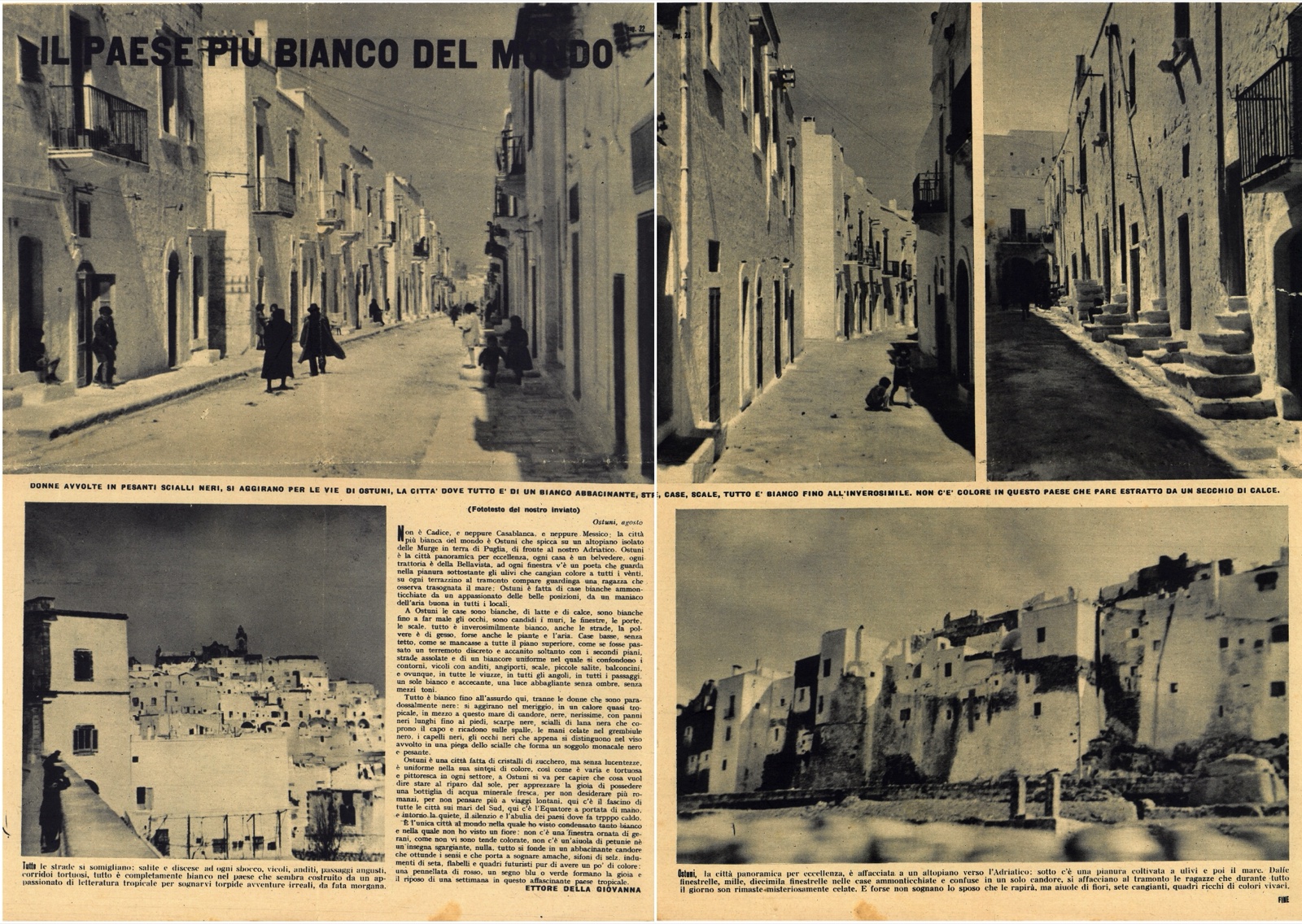
The whiteness of Ostuni is born of lime. Behind that white lie the local stone, the kilns that fired it and a rich dialect vocabulary.
The White City
It is difficult to determine exactly when the practice of whitewashing the interior and exterior walls of houses with lime became established in Ostuni. This practice is probably very ancient, given that lime – derived from the limestone in which our region is rich – remains, even today, one of the most economical materials, possessing significant properties. It has disinfectant properties that combat mould, fungi and pests. The white colour imparted by the lime to the walls, due to its ability to reflect light, increased the brightness of the houses, particularly those on the ground floor, situated in narrow, winding alleyways.
The earliest documents attesting to the use of lime to coat the walls of buildings in Ostuni date back to the last three decades of the 1500s. The term used is ‘allatticare’ (in our dialect, the word ‘allattëcà’ – present tense ‘allattëchèscë’ – has the opposite meaning: to smear) (T. Nobile, Dizionario del dialetto ostunese, ed. Congedo, Galatina, 1999, vol. I, p. 67). The word bears a closer resemblance to ‘allatamatë’ (‘soft, almost milky’) (ibid., p. 67), a term common in the Taranto dialect when referring to mussels, oysters and fish that, at certain times of the year, produce a milky substance.
In 1579, the tender specifications for the construction of the rural Church of the Holy Spirit – which was demolished in the 18th century – stipulated that the master mason was to: “plaster it both inside and out to the extent that the site of the said church requires, and that he must complete the said work so that it remains beautiful, finished, set and plastered” (Brindisi State Archives, Ostuni Notarial Register, notary Antonio Melleo, 1579, fol. 90r).
In 1587, the term used for whitewashing with lime was instead ‘abboccare’, likely a corruption of ‘abbuccicare’, ‘abbucəcà, abbuggəchèjə’ – a term which, in the Martinese dialect, meant ‘to cover thoroughly’ (G. Rohlfs, Vocabolario dei dialetti salentini, ed. Congedo, Galatina, 2007, vol. I, p. 25). It is again in a contract for the construction of a house that the master masons are required, regarding the lintel to be built, to ‘cover it entirely with lime, and on the outside of the door’s façade as far as the wall extends…’ (As Br, notary Melleo, 1587, fol. 86v).
The terms lénërë, lënëtòrë, lënëtùra, lënùtë- lunùtë (from the Latin lĭno,
ĭs, lĭnivi ‘to smooth, lĭtum, lĭnĕre, to spread, to anoint, to cover’) appear in 17th-century documents and are those currently used in everyday vernacular speech.
Statement made to the procurator of the Cathedral Chapter by the ‘master builder’ Donato Antonio Antelmi regarding work carried out on the ‘Casa della Musica’. It is hereby certified that “twelve ducats were spent on finishing the aforementioned house” (Ostuni Chapter Archives, Budget Collection, folder II, file 7, 1643–1644, fol. 1r)
Lime kilns
Lime kilns are ancient structures, dating back to when lime production first began. The earliest record of a lime kiln in the Ostuni area dates from the mid-1500s, but there were certainly others, albeit undocumented, as far back as Roman times, if not earlier. It can be assumed that lime kilns were once built in areas close to the structures to be erected, only to be dismantled once construction was complete.
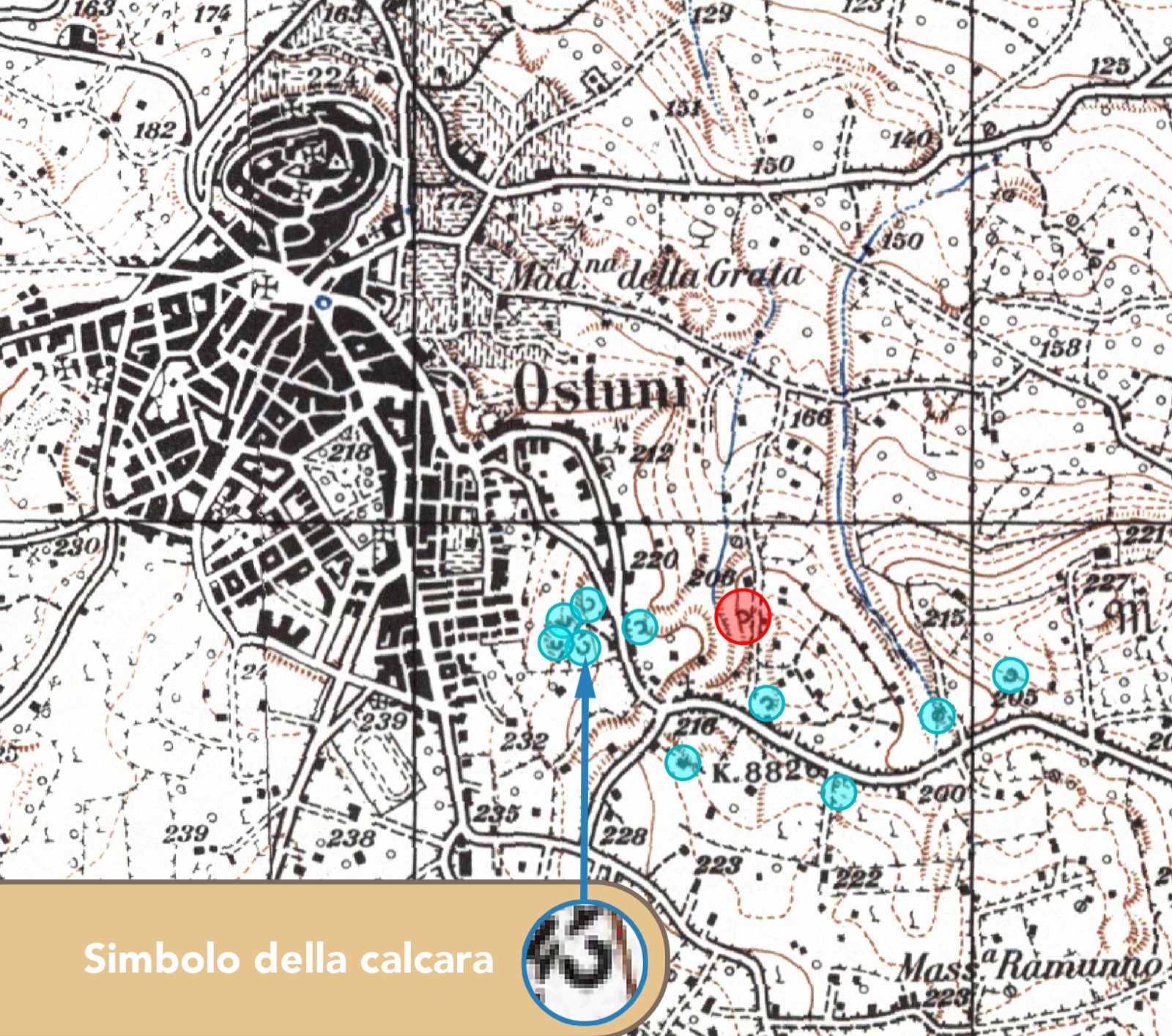
We can certainly speak of a stable industry with permanent lime kilns from the late 1800s onwards. There is a particular area in Ostuni where the lime kilns were located, namely the area around the sanctuary of the Madonna della Nova. There were 17 of them in the 1960s. A further three were situated in other, outlying areas of Ostuni, all of which were characterised by the presence of quarries from which stone was extracted.
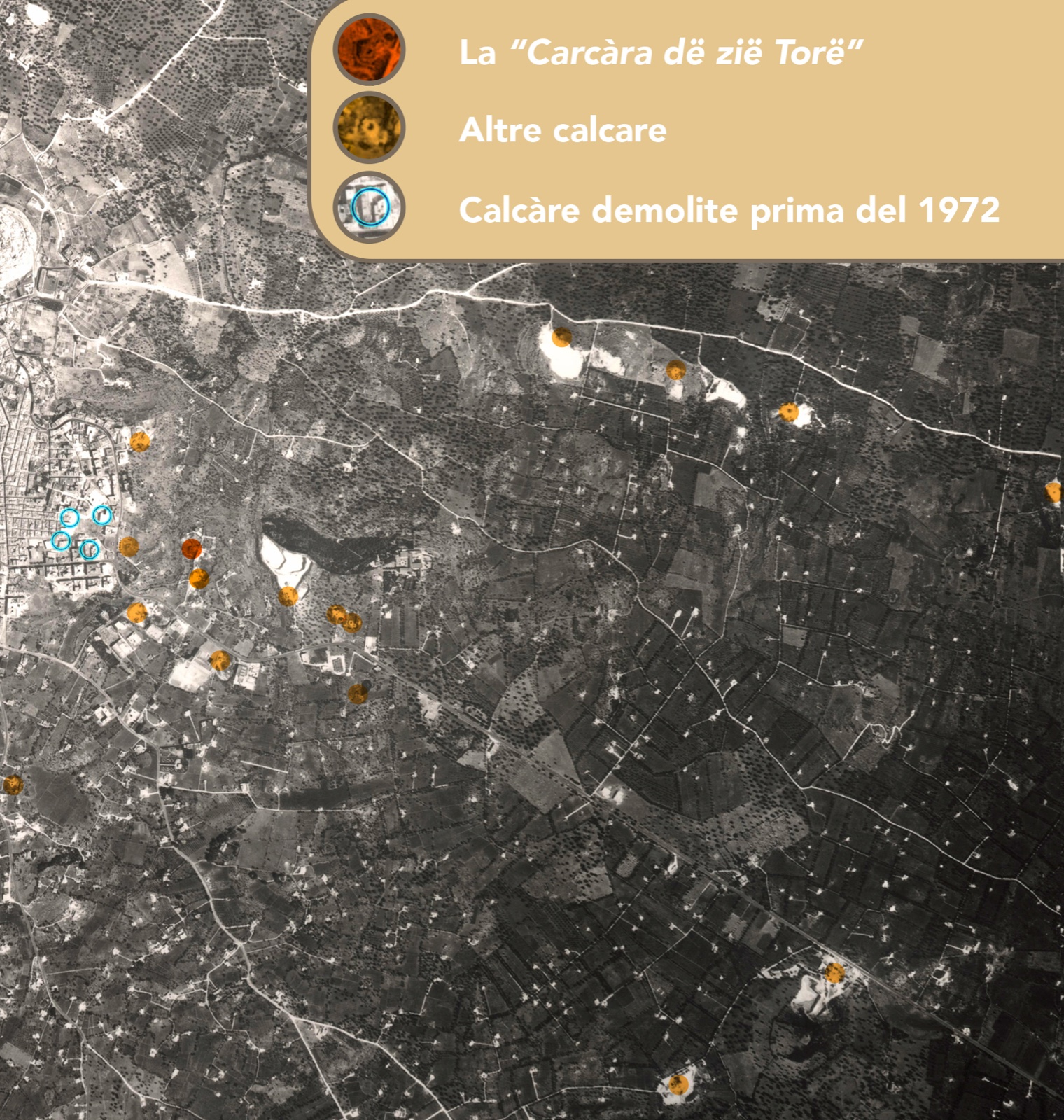
Types of lime kiln
The wood-bundle lime kiln
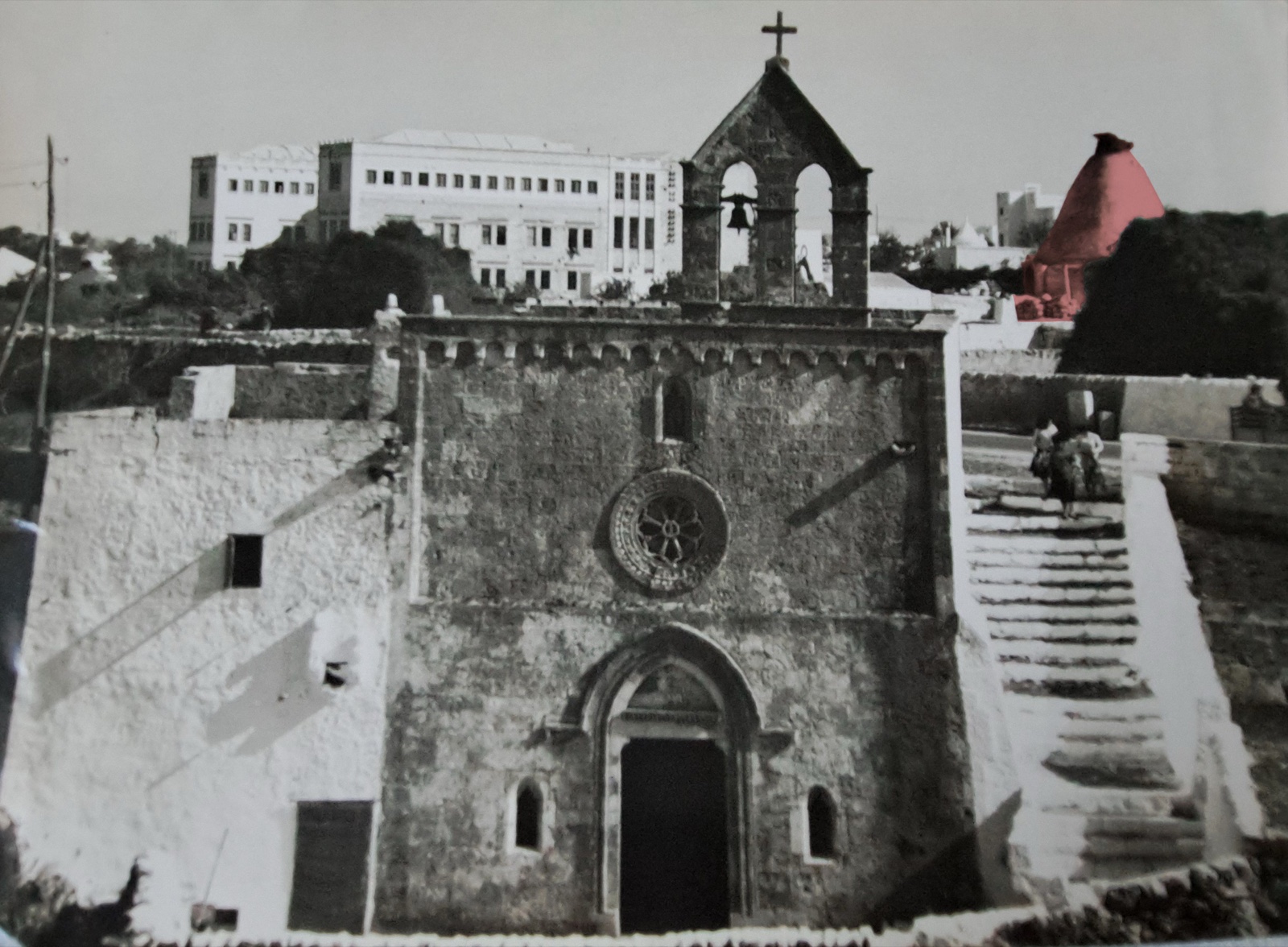
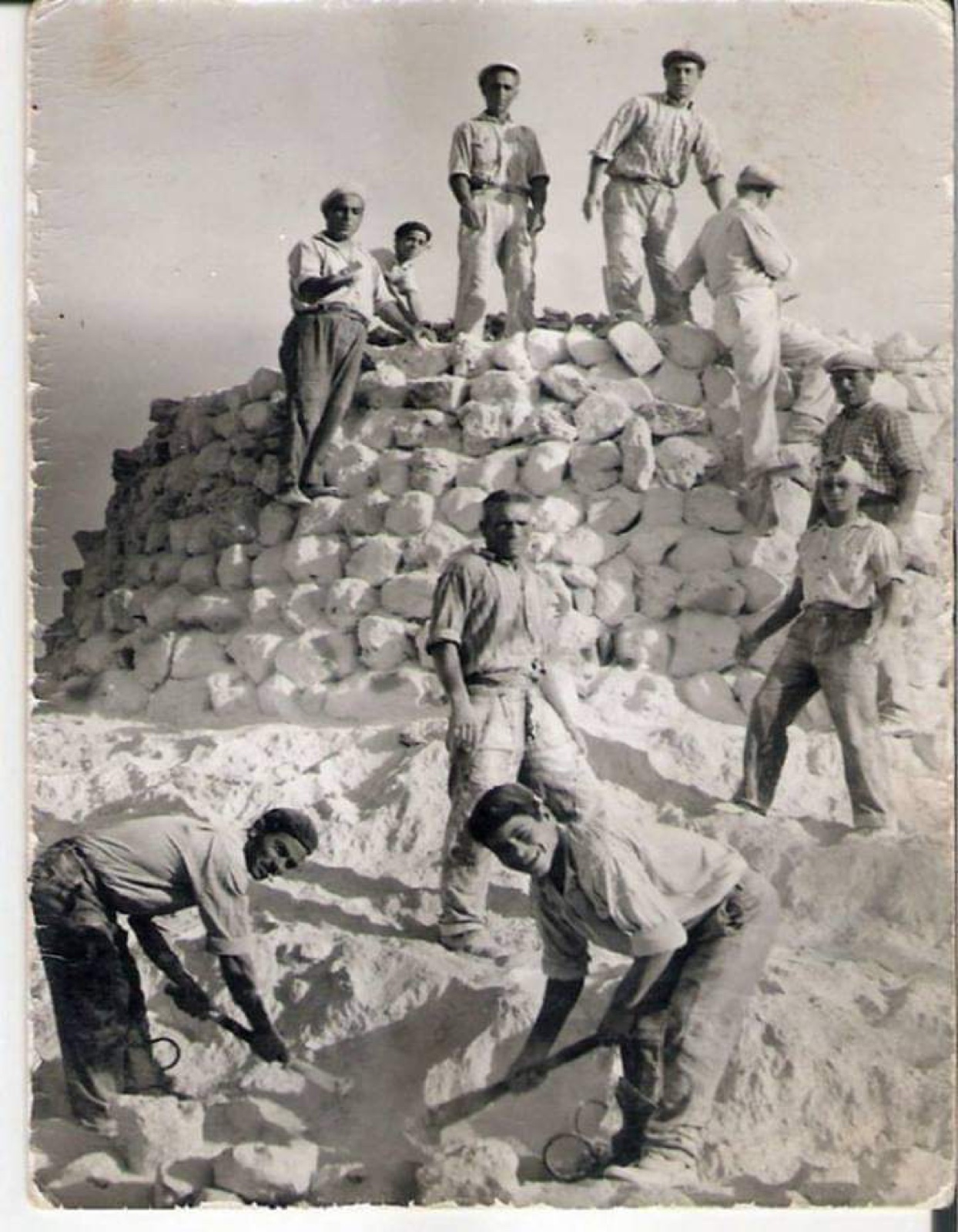
The “Carcàra dë zië Torë” is the oldest type of lime kiln still to be found in our area. This type of lime kiln was also known as ‘la carcàra d’uèrra’ because it was traditionally in use until after the Second World War. It was a kiln fuelled mainly by bundles of wood and other agricultural waste such as almond shells, and was capable of producing up to 600–700 quintals of quicklime per production cycle.
At the centre of the kiln cylinder, the false-dome structure of the combustion chamber (the ‘làmia’) was built entirely using dry-stone masonry; the limestone blocks to be fired were arranged around and above it. To increase the lime kiln’s production capacity, the so-called ‘murë d’ndèrrata’ was also built on top of the permanent structure: a dry-stone wall arranged in a circular ring along the edge of the kiln, 2 to 3 metres high, which allowed a greater volume of limestone to be loaded for firing. At the end of each production cycle, this wall was dismantled.
The lime kiln fuelled by olive pomace
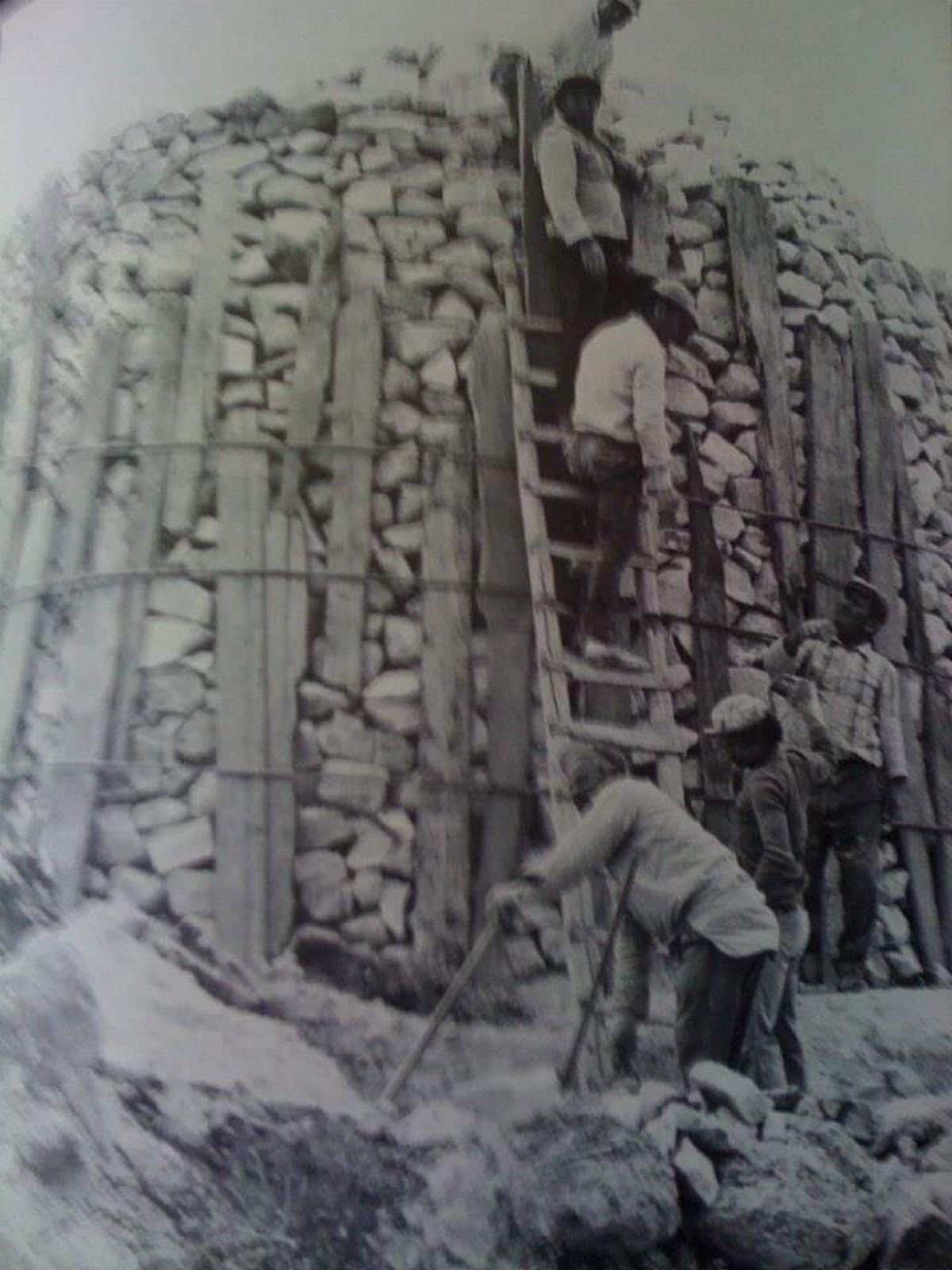
Olive pomace, a by-product of olive processing, with a calorific value of around 4,500 kcal/kg – higher than that of wood – began to be used as fuel in the lime kilns, enabling production to be increased to 1,200 quintals per cycle. To cope with the increased volumes of material to be fired, the height of ‘lu murë d‘ndèrrata’ was raised to 5–6 metres, reinforcing it with metal hoops and wooden planks.
Larger lime kilns also became widespread, built from tuff blocks and featuring
the same traditional elements – lamiòdda, arch and furnace – but on a larger scale, to which was added ‘lu trabbucchë’: a structure adjacent to the furnace, where the ‘carvënèdda’ was unloaded, the charcoal produced during firing, thanks to a thick iron plate positioned at the centre of the kiln, which was slid horizontally along cast-iron side rails to clear the kiln.
Ash and charcoal were removed through the external iron door of “lu trabbucchë” to be sold: the ash as fertiliser for agriculture, and the charcoal to fuel the braziers used to heat homes.
The lime kiln with ‘trionfo’
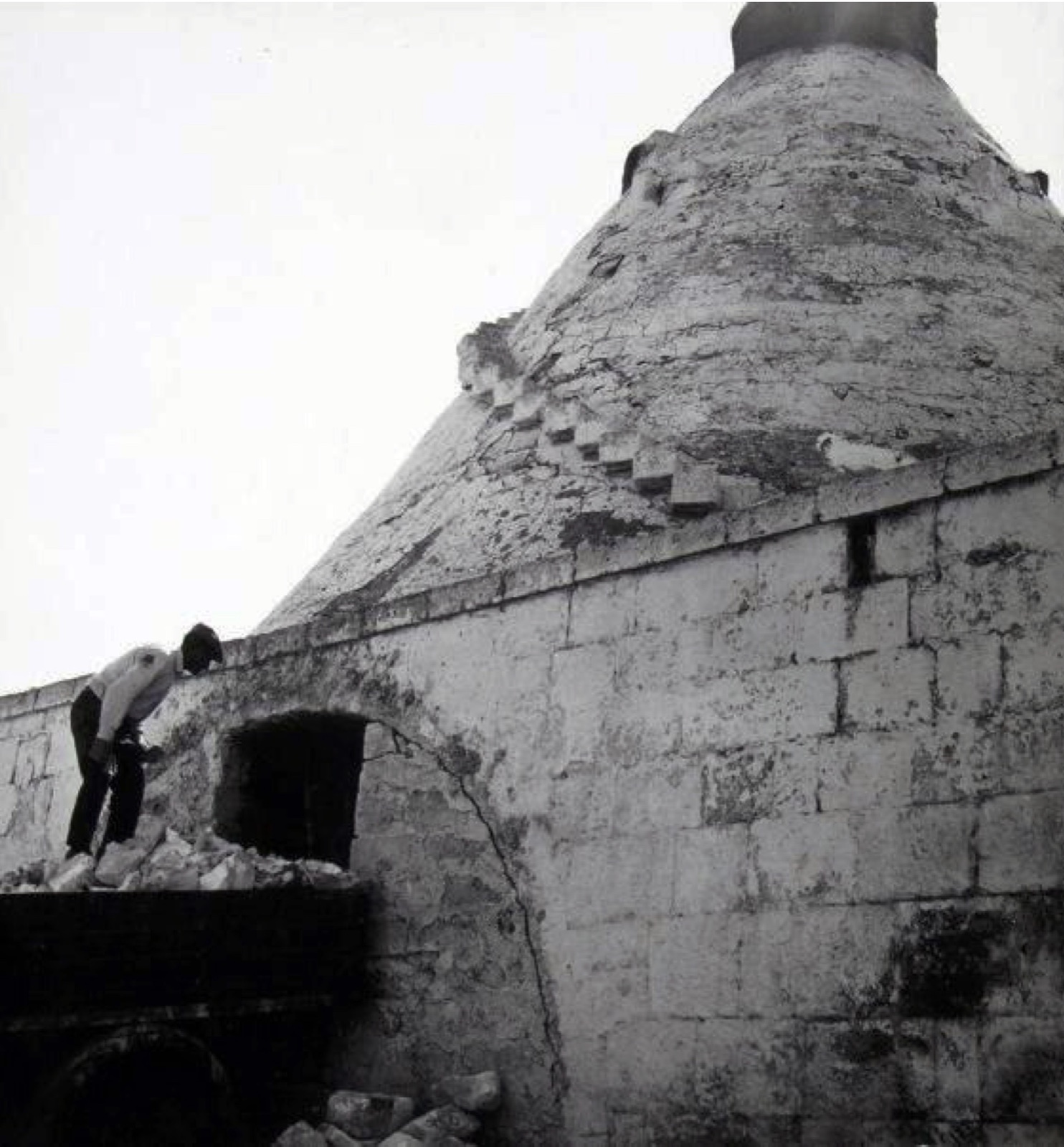
Technological advances led to the construction of even larger lime kilns, built entirely of tuff and also fuelled by olive pomace. These were imposing structures, five metres high, with a square base measuring ten metres on each side, topped by a tall cone that could reach a height of eight metres.
On each side of the building there were large arched openings for loading and feeding, which were then sealed off with temporary walls during firing. For this type
of kiln too, as with the previous ones, the production of quicklime took place in production cycles, involving loading, firing and the extraction of the quicklime; however, the entire structure, including the large conical chimney at the top, known as the ‘trionfo’, was permanent and did not need to be dismantled at the end of the production cycle.
The industrial kiln
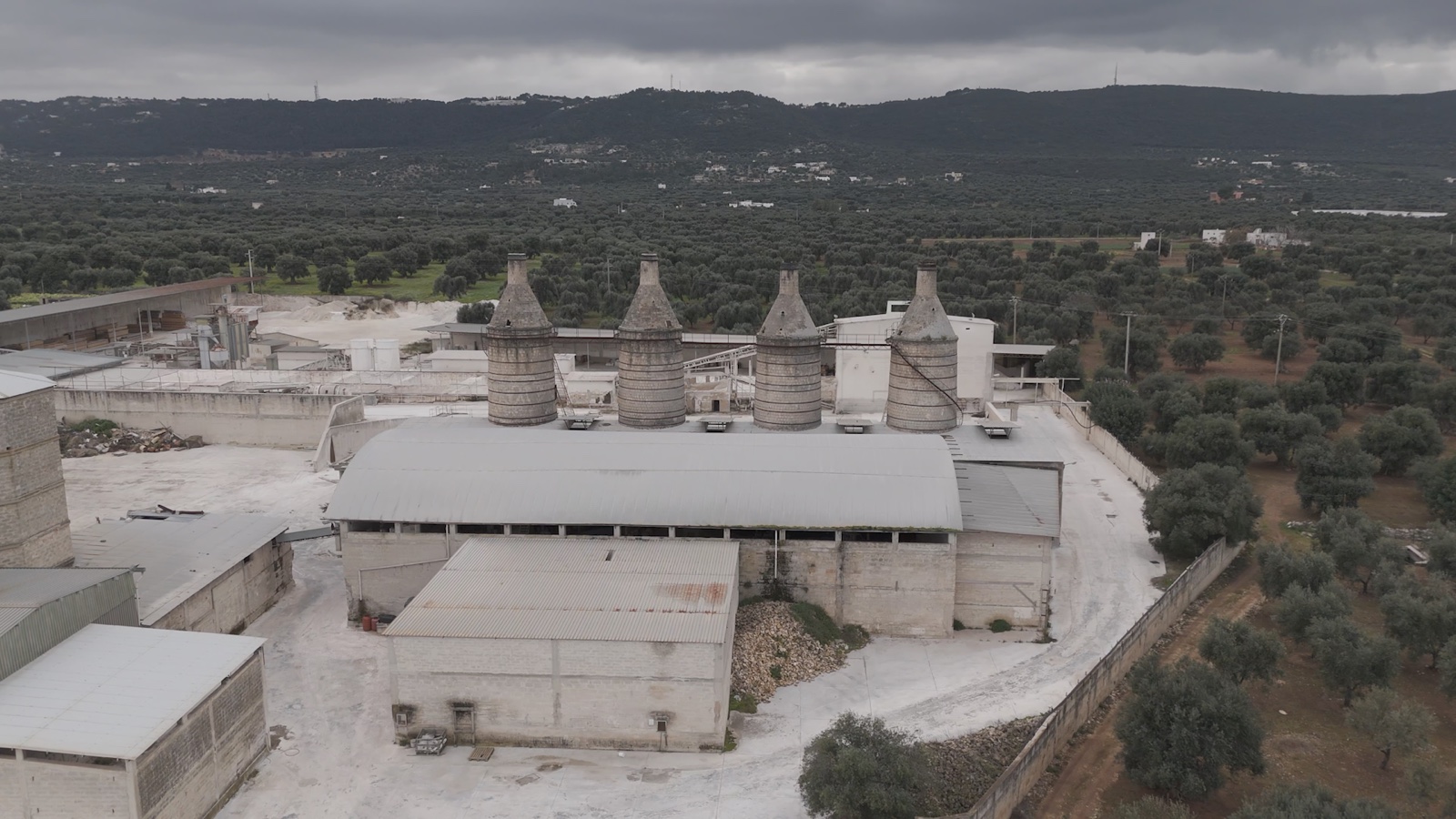
In the 1970s, the first industrial-scale lime production plant in the area was built in Fasano. Unlike traditional kilns, ‘continuous-fire’ plants remain in operation without interruption for long periods. Limestone is loaded from the top and, as it gradually descends towards the hottest areas, is transformed into quicklime, which is then collected at the bottom. This system allows for higher output as it eliminates the downtime associated with loading, cooling and unloading typical of traditional kilns. From an energy perspective, too, the system is more efficient: the cold air that
enters at the base is preheated on contact with the already burnt material, aids combustion and, as it rises, transfers heat to the limestone that has just been introduced. Furthermore, it is not necessary to heat the entire kiln structure each time, resulting in further fuel savings.
This increased efficiency and productivity of industrial-scale kilns has led to the disappearance of traditional lime production and, consequently, the abandonment of limestone quarries.
Proverbi e modi di dire
The importance of lime in our region is reflected in the variety of terms found in the local dialect to describe the material’s specific characteristics.
- Càngë vèrgënë: quicklime, calcium oxide
- Càngë spënëlàta: powdered quicklime
- Càngë curàta: slaked lime, calcium hydroxide
- Càngë trëmbàta: mixed lime
- Càngia gràssa: fat lime
- Càngia mazza: lean lime
Proverbs relating to lime and the work of the lime kiln:
- E ttu pë ccàngë tèrra-lóta mittë? —
Are you putting mud instead of lime? (Instead of improving a situation, are you making it worse?) - Sì nna carcàra! —
You’re always smoking like a furnace - Càngë mea diletta, accummëgghjèca agnë dëfèttë —
Precious lime that covers (hides) every flaw - Càngë viànga pulìzza a ttuttë vannë —
Lime cleans everywhere - Ràšca la càngia ièssë la pëtra —
Just as scraping away the lime reveals the wall beneath, so too does digging deep bring some secret to light - Stuni sbianga, Carëvìgnë vedi —
(a proverb common in Carovigno) Ostuni, being higher up and clearly visible, was often attacked by enemies. Carovigno, on the other hand, managed to defend itself because it was less visible.
Sources: T. Nobile, Dizionario del dialetto ostunese, ed. Congedo, Galatina, 1999 · R. Santoro, Proverbi, modi di dire e curiosità di Ostuni, Ed. Lo Scudo, Ostuni 2020.