The hands of lime
Lime and the
associated jobs
The hands of lime
The cycle of lime and the men who kept it alive: kiln-workers, quarrymen, carters and whitewashers.
The lime cycle
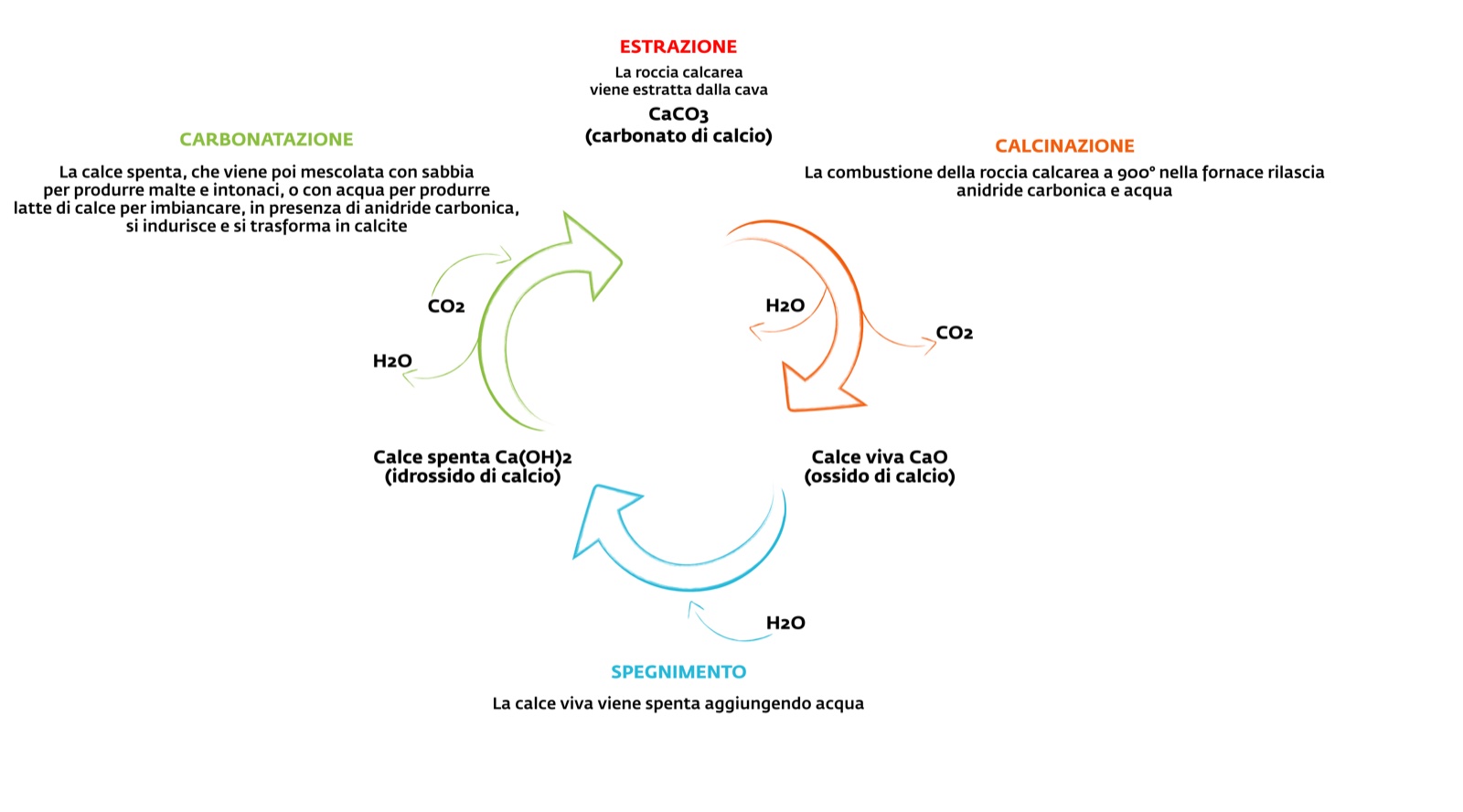
The cycle of air-hardening lime unfolds in four key stages: selection and extraction of limestone, firing (calcination), slaking and carbonation. It is a simplified scheme: in reality the physical-chemical changes are far more complex.
1. Selecting the limestone
The mineralogical and chemical characteristics of the limestones used as raw material for the manufacture of lime are of fundamental importance. The limestones
most suitable for the manufacture of air lime must have a microcrystalline structure, a high carbonate content and an impurity content not exceeding 5 per cent.
2. Firing
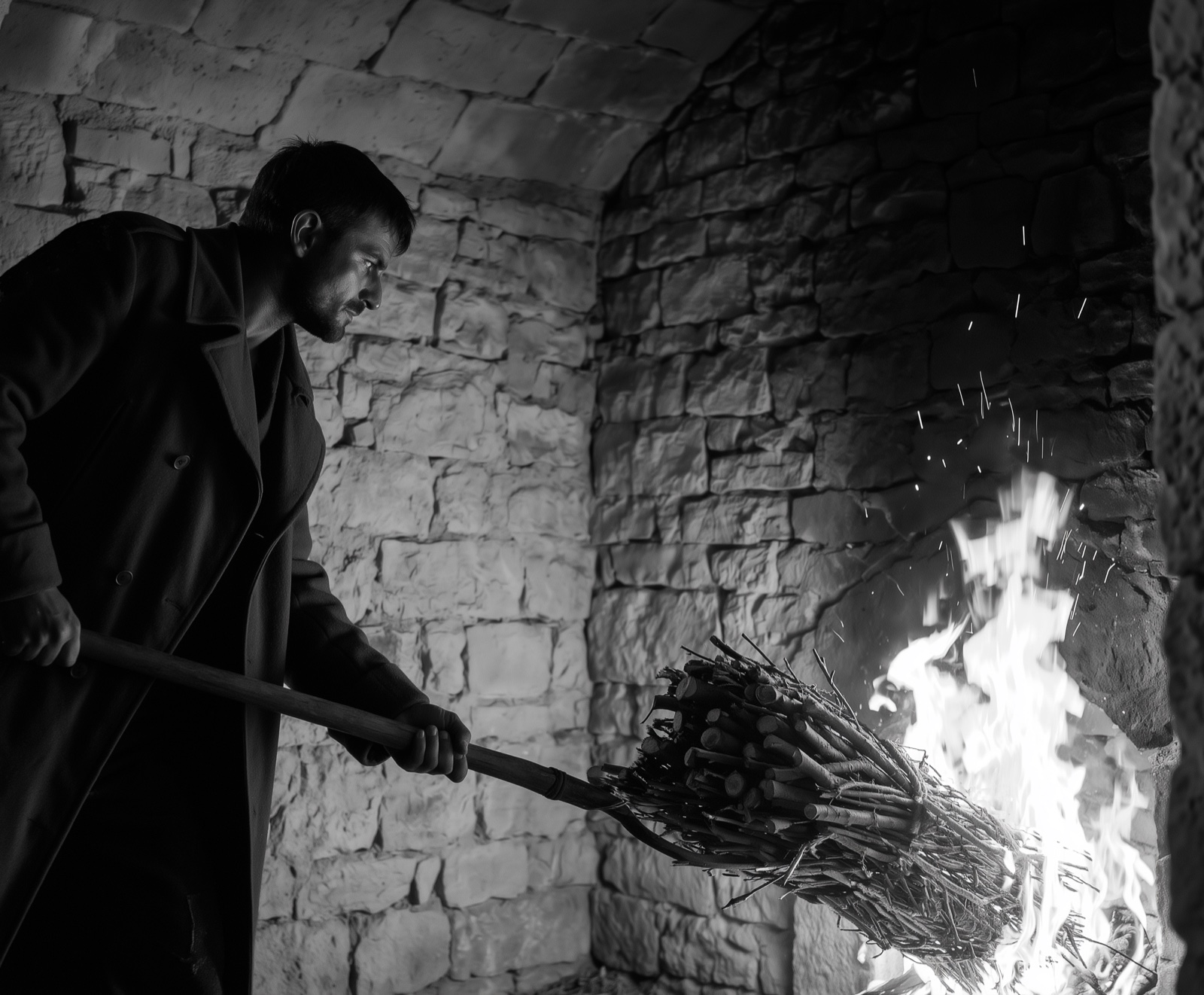
During the firing stage, the limestone is placed in kilns and heated to a temperature of around 900°C. Under these conditions, calcium carbonate decomposes into calcium oxide (quicklime)
3. Slaking
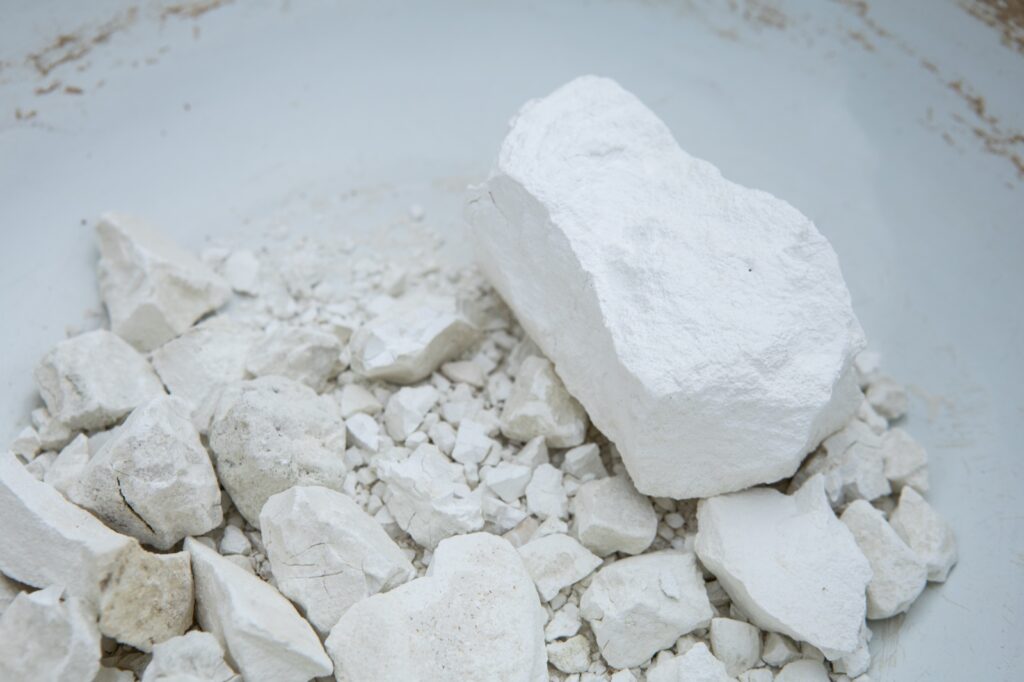
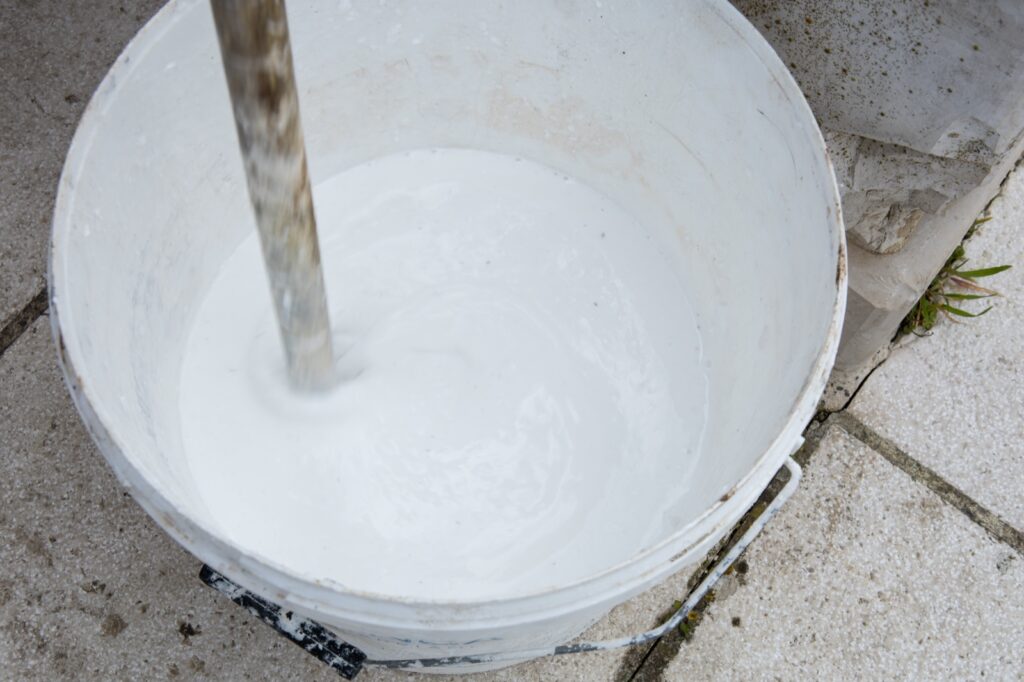
After firing, when quicklime comes into contact with water, it reacts with a strong release of heat and transforms into a white powder (or paste) known as slaked lime, chemically calcium hydroxide.
4. Carbonation
Once in use, in the form of mortars, plasters, paints etc., carbonation takes place. This process, which can only occur in the presence of carbon dioxide (and free water), causes the slaked lime to transform into calcite.
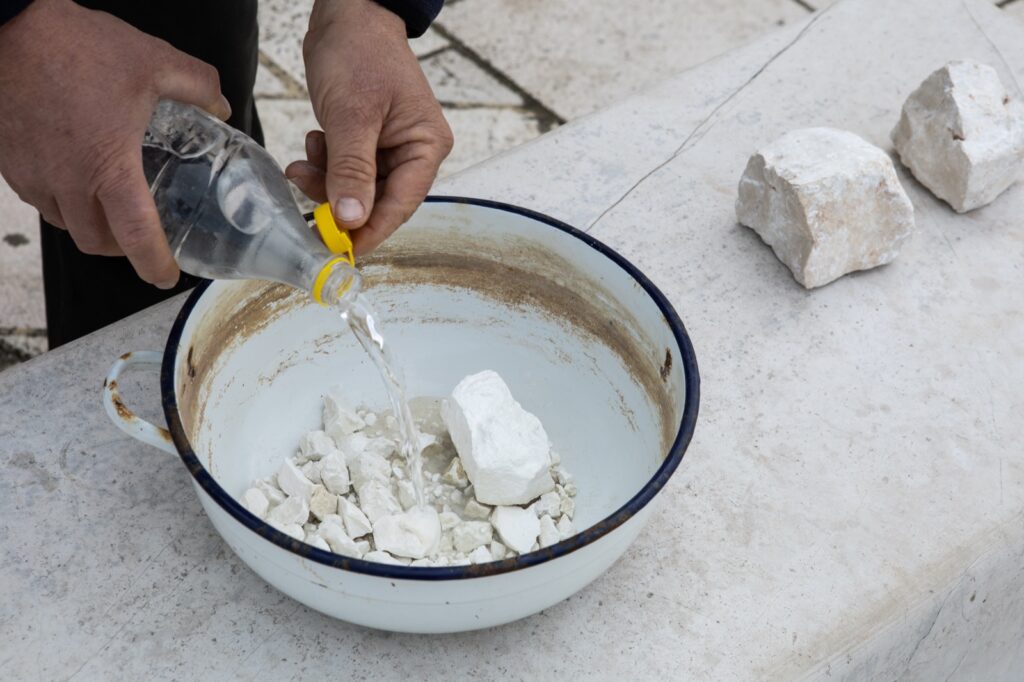
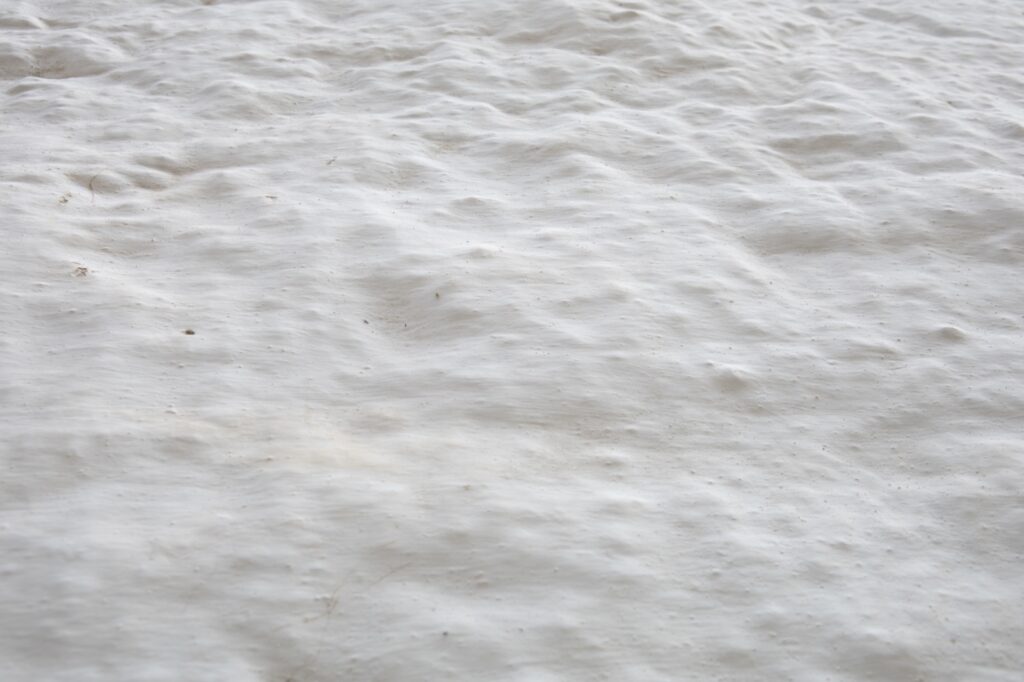
“There is something magical about taking a stone from the Earth, breaking it down with Fire, shaping it with Water through art and ingenuity, and restoring it to its original solidity and strength under the influence of Air”
— attributed to Empedocles
The trades of lime
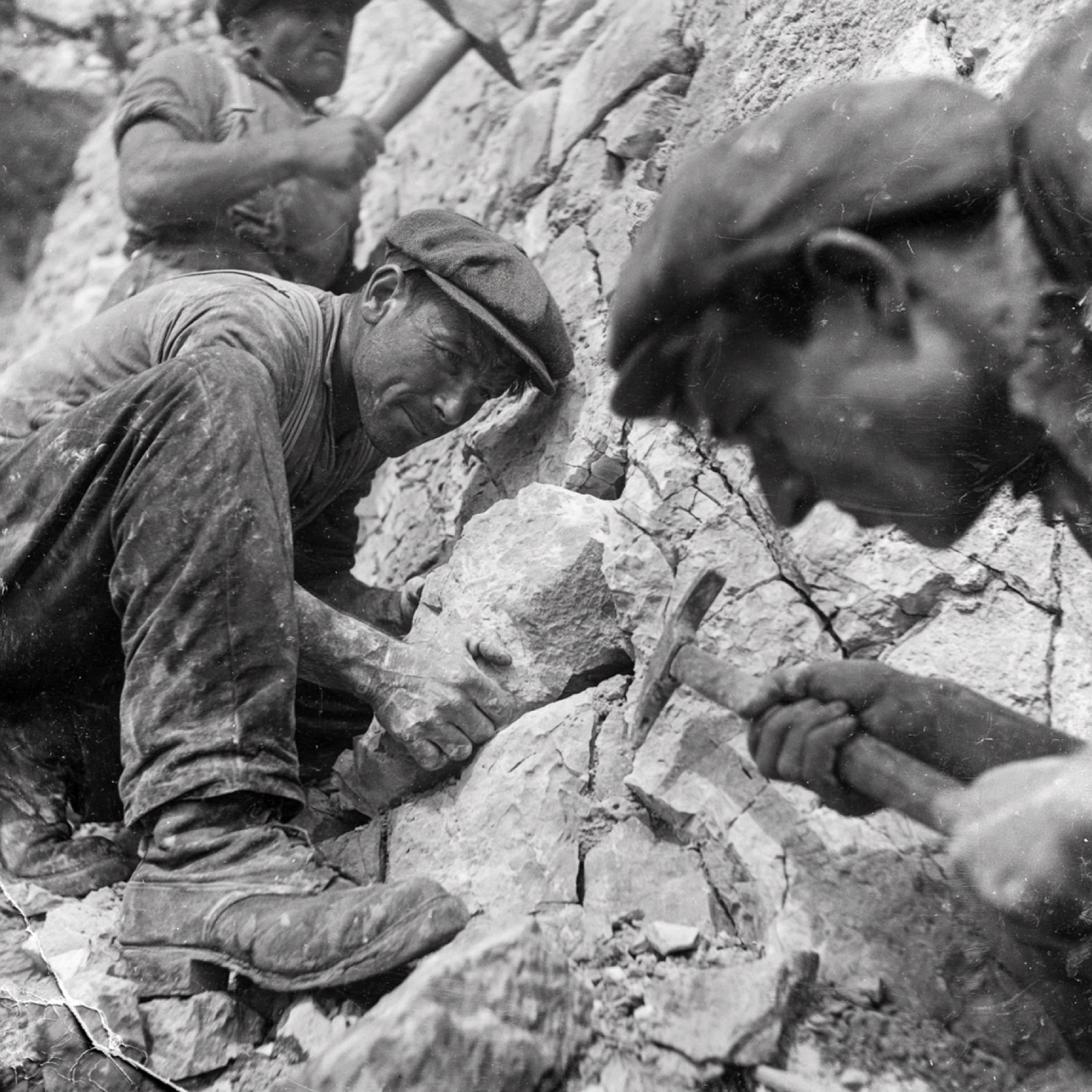
The images in this section are generated with artificial intelligence.
«Lu carcarulu» — the kiln-worker
The term ‘carcarulu’ referred both to the skilled labourer who worked in the lime kiln and to the manager or owner of the plant. That of the ‘carcarulu’ was a hard and dangerous trade. It was gruelling because it required almost non-stop work, always carried out outdoors and in all weathers. It was dangerous for two reasons: close contact with fire and with the red-hot quicklime stones exposed the worker to serious physical risks, compounded by the toxic fumes released during the combustion and firing of the stones.
«Lu zëccatórë» —
the stonecutter
This role was often filled by the carcaruli themselves, who did not merely limit themselves to burning the lime but also had to source the raw material – limestone – directly. The work began in the quarry, where the quarryman prepared and detonated the explosives. The explosions fractured the rock, creating cracks and breaks in the rock face; at that point, the lu zëccatórë could intervene manually, using the pickaxe – lu zëcchèttë – and the ice axe – lu zëcca – to the rock, creating cracks and breaks in the rock face; at that point, the ‘zëccatórë’ could intervene manually, using a pickaxe – the ‘zëcchèttë’ – and a chisel – the ‘zappónë’ – to detach the blocks of stone and break them up.
«Lu trainérë» — the cart driver
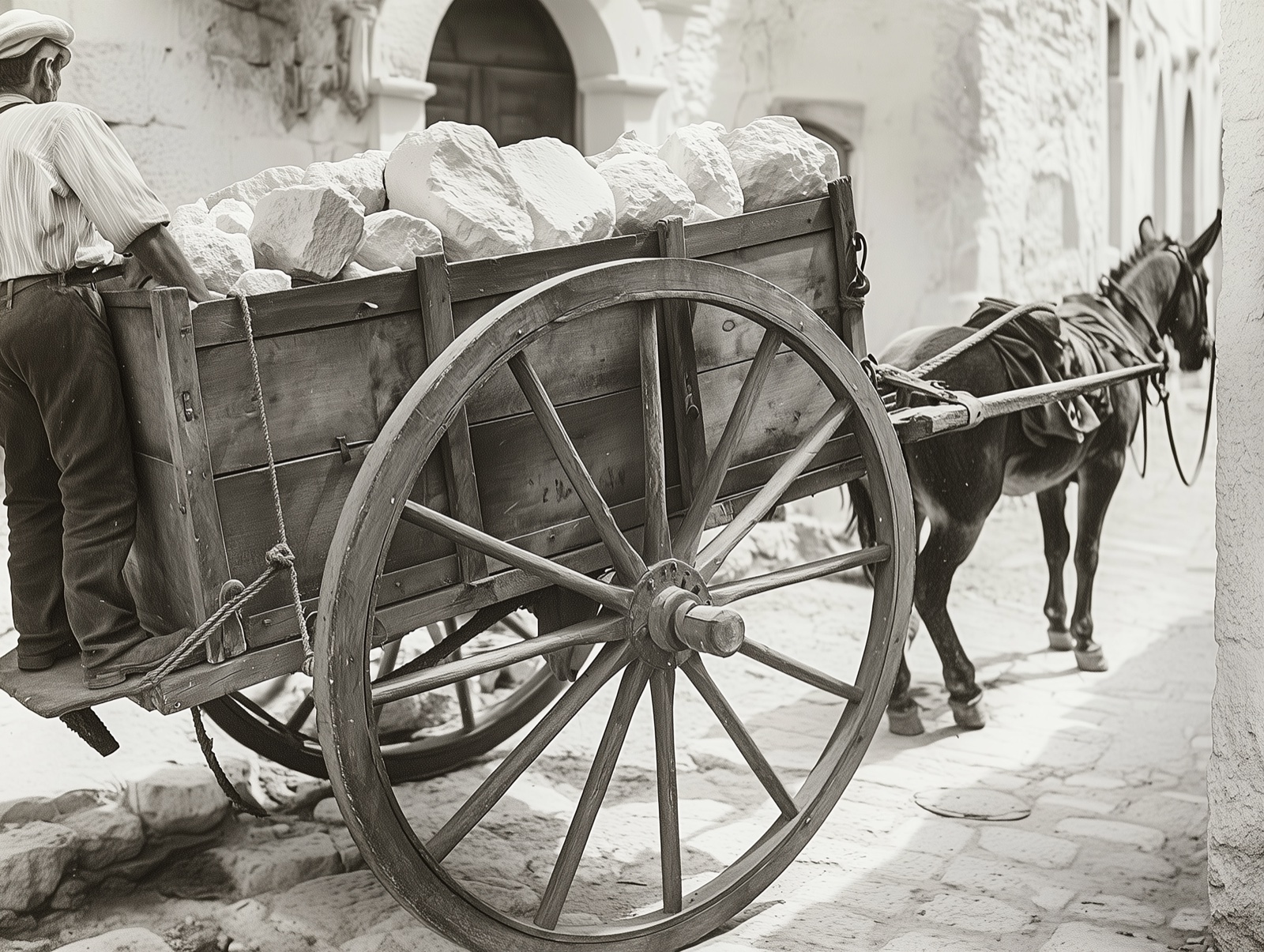
The ‘trainiere’ was the person who bought and transported quicklime from the lime kiln using his ‘traìnië’ (cart) – usually pulled by a donkey – to sell it on to homeowners in the historic centre and the 18th- and 19th-century districts of Ostuni, as well as to the countless ‘lamie’, ‘trulli’ and ‘masserie’ scattered throughout the area. A ‘traìnië’ could carry up to 15 quintals of lime. The cart driver also played a role in preparing the lime kiln, as he transported bundles of brushwood – generally consisting of leafy branches from pruned olive trees or from woodland clearing, as well as almond shells – from the countryside, olive groves and woods of the Itria Valley to the kiln; these would then be used to fuel the kiln.
«Lu lënëtórë» — the painter
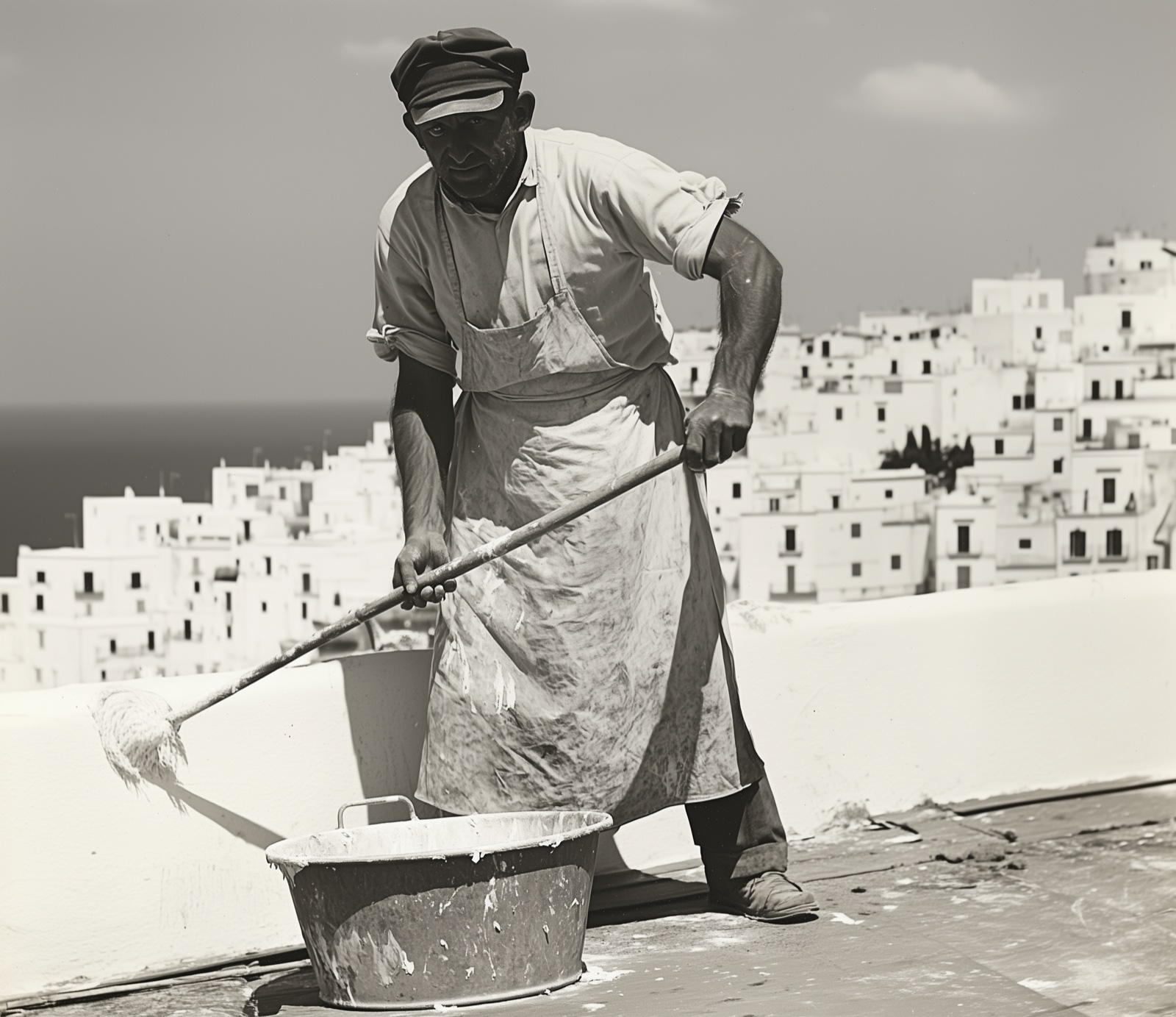
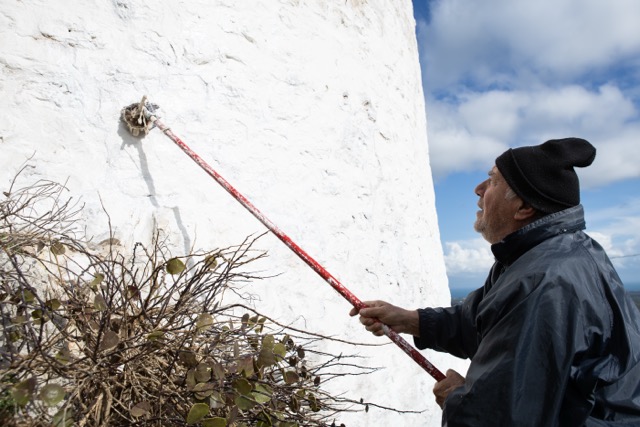
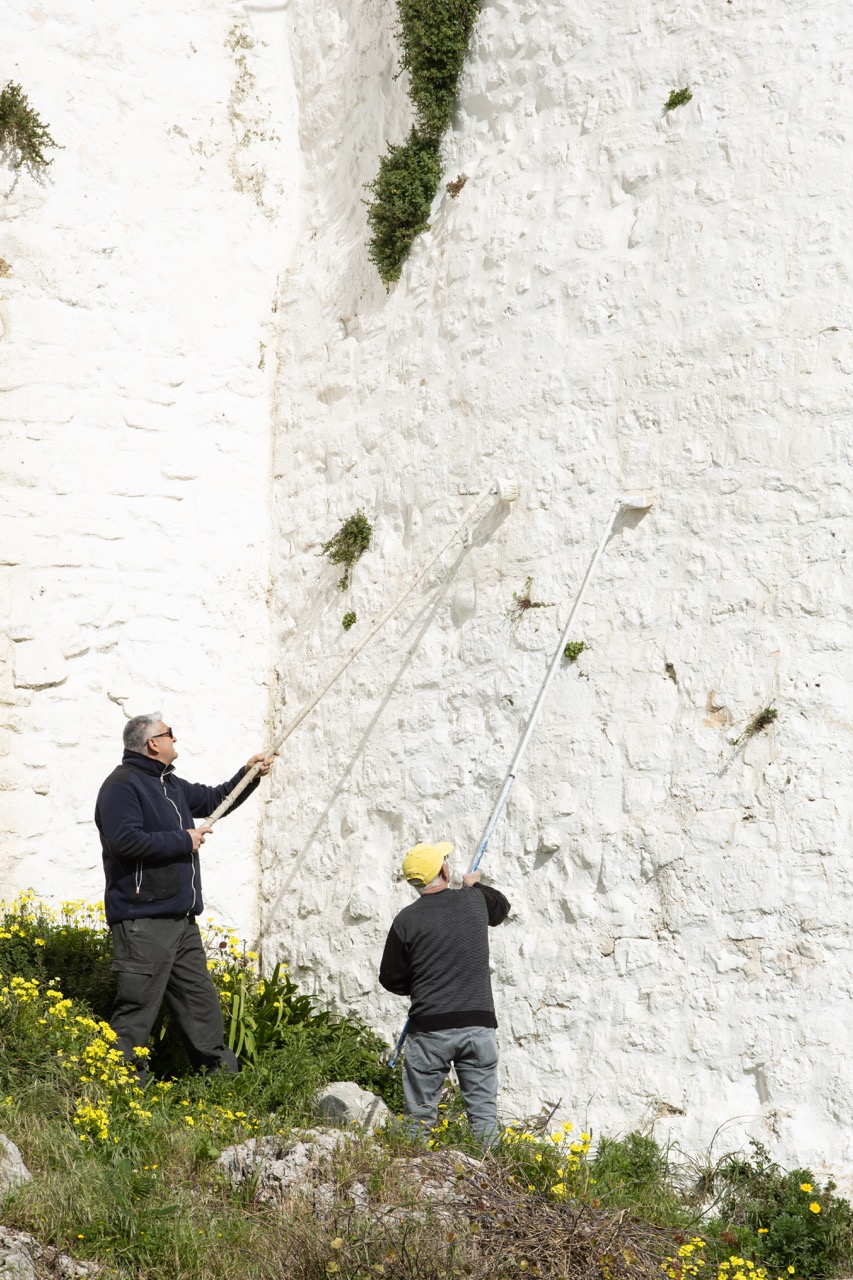
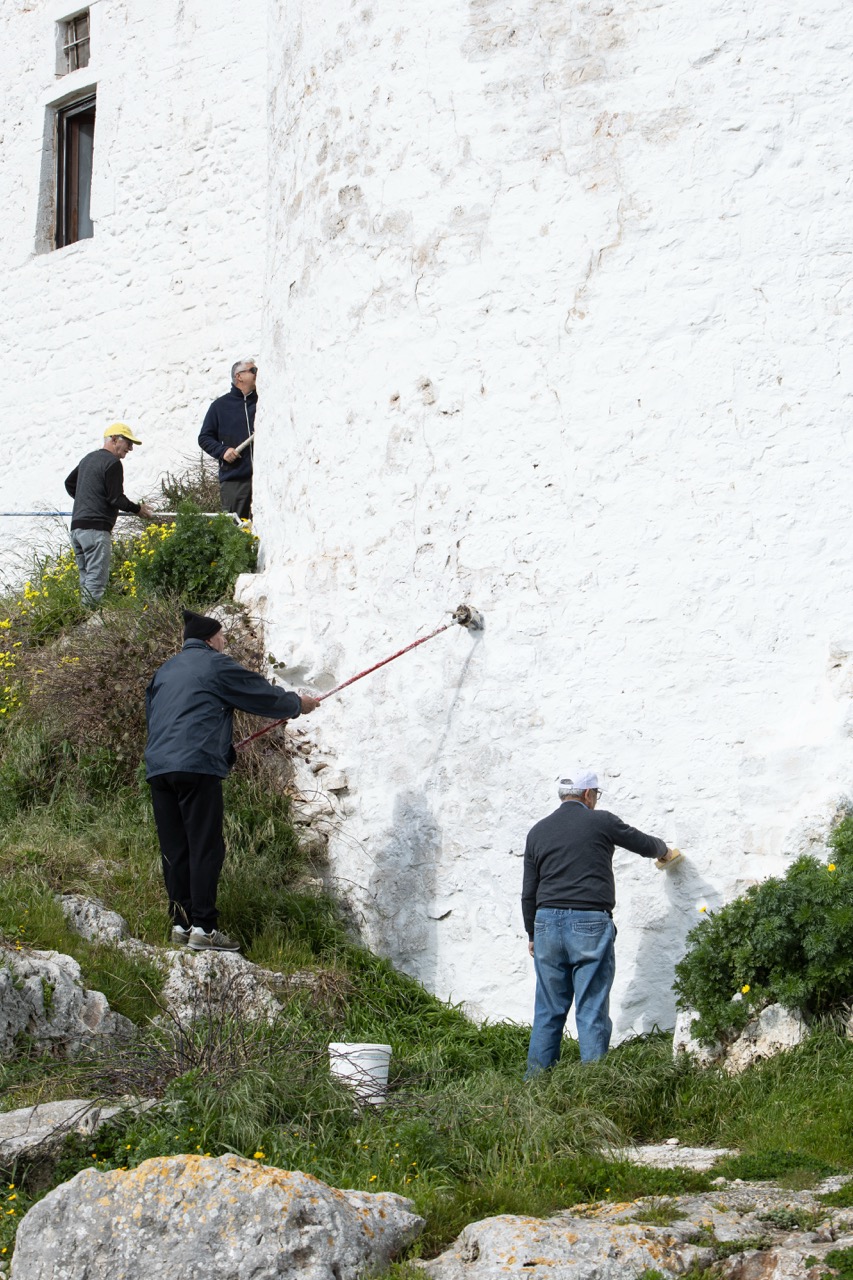
The trade of the lënëtórë is still today one that requires two inseparable qualities: skill and experience. The skill lies in reaching every corner of the wall, even the most difficult and remote ones. The main tool is lu scuparièddë, a large brush that the lënëtórë used to make with his own hands during the winter months, when whitewashing work came to a halt. It was made by plaiting horsehair and pig bristles, tying them around a ring of wild fig wood – the ròzzëla – skilfully shaped to form a cup. This shape was no accident: it allowed the brush to hold the lime without dripping, to cover large surfaces in a single stroke
and to apply an even coat each time. The scuparièddë was then carefully tied to the handle at just the right angle, so that the movements of the handle allowed the brush to hold the lime without dripping, to cover large surfaces in a single stroke and to apply an even coat every time. The scuparièddë was then carefully tied to the pole at just the right angle, so that the pole’s movements would result in a smooth and precise application onto the wall. The choice of pole was equally deliberate: poles of varying lengths – from one to eight metres – were used, selected on a case-by-case basis depending on the height and distance of the surface to be reached. Leaning out of windows, loggias and terraces, the lënëtórë was thus able to apply the lime to the most awkward and seemingly unreachable spots. Experience also comes into play when preparing the lime: achieving the right consistency is crucial. The mixture must be fluid enough to flow easily over the brush, yet thick enough to settle on the wall in an even layer, as smooth as marble.
Lu Lënëtórë
by Beniamino Farina
Ancora na ss’affitta ca la mëgghjéra,
cu nu uècchjë apièrtë e ll’andë achjùsë,
quanne s’anza,
lu trèmende da sotta suse.
Lu bbenèdesce, ma stè preoccùpata,
ca sobba a cudd’aschète
na parapetta manghe jone criàte,
e àbbasce stè cu cade.
Lu marite da peccinne ve’a llene ddà
e sape cumme s’ava cumbertà.
A prim’ora se mmìa chera demmàne,
cu llu senalu nnanze, li canne ‘nghùedde e
li scupareddère mmane.
Pure na corda se porta rete,
pe lene cure parete,
da suse all’asteche na ramersa de cangia
ava calà ca la facciata totta l’ava speccià.
Sotta a Porta Nova, a dd’ava scì chera matina,
la casa, affaccia pure alla marina e,
tanda ca ì jerta, na vertiscena te vene,
solamende a tremende.
Suse a ll’aschete la cangia,
lu patrune ha già pertate, ma nà ll’à teccata.
Lu lenètore sape cumme l’ava scuagghjà, pe puterla fatià.
Cu lu bastone, la gira e la vonda, bona l’ava preparà,
cochelu nà non’à stà, scenoca strazza quanne lene e,
lu parete buène nance vene.
A Sande Ronze penza, prima cu accumenza.
Sobba a ll’aschète senza parapetta se stènne,
ma nu culore li ‘nghjana e nande li scenne.
Mire a bbasce trèmende lu parete,
lu nguadra e lu squadra, pe vetè cumme ava ccumezà.
Buene l’ava fà, ca na l’one mmalagnà.
Cu la canna corta e lu scuparièdde arringhiate,
de cangia mena li prime mazzate.
Cu chera longnja, da inda a la finestra, nande pezzette n’ava fà e,
da rete a llu stradone, cu la scala de remmenà l’ava sspeccià.
La cangia ‘ngrosce e scrosce stenne sobba a llu parete,
l’alliscia e quanne sciarescia lu biangore s’accumenza a vvete.
La fatia camina, ste lu frische, lu solu na lu cosce,
fisca e canda pe nna ppensà, a llu periculu ca pò passà.
Menzatia ì passata, manghe nu surse d’acqua ava assaggiate,
ste’ tutt’assagliate, però à specciate.
Da sobba sotta tremende lu parete,
ngun’anda mazzata ce nge vò ava menà, ca lu vecetare, l’anne ce vene, arreta l’ava chiamà.
Doppe ca ha specciate, Sande Ronze ha rrengraziate,
ca abbasce nanc’ì cadute e ppure josce bbona li sciute.